A Message from Federation President Phoebe Stein
It’s back-to-school month, a transition marked in recent years (and especially this year) by a wave of reporting around “the end of reading,” and declining literacy across the board—from elementary grades to high school to college.
And yet, alongside this negative trend, there are hopeful stories as well. As Peter Schmidt pointed out in The New York Times last month, groups dedicated to reading together and discussing books together, in person, are on the rise.
The most hopeful story to me is this: humanities councils already have solutions for the literacy crisis. Councils already know how to get preschoolers, kids, teenagers, and adults from every background excited about reading and interpreting literature.
In a world of complicated problems to solve, this is a straightforward, easy-to-achieve, bipartisan-supported solution. This is why humanities councils need their Congressionally-appropriated funds fully released—so they can focus on expanding proven literacy programs and grant-making instead of being forced to cut programs and staff.
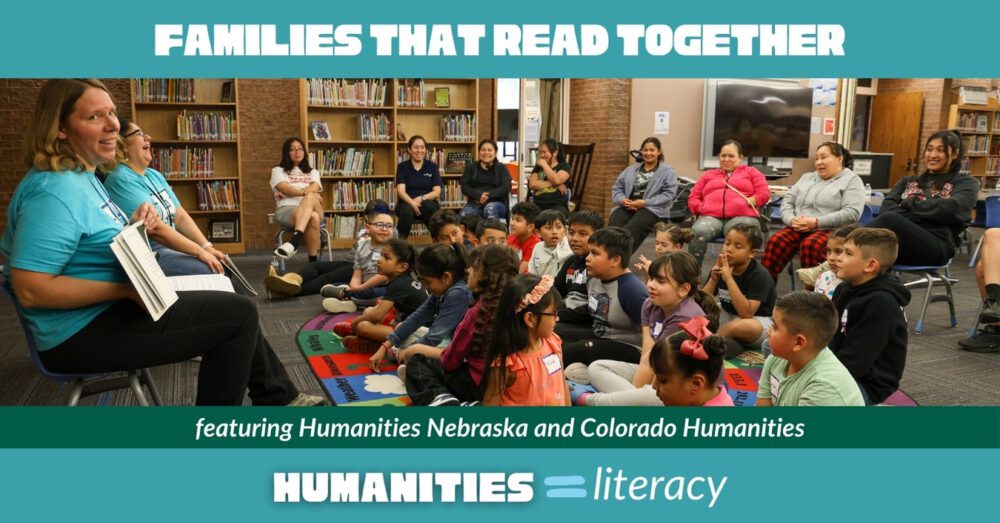
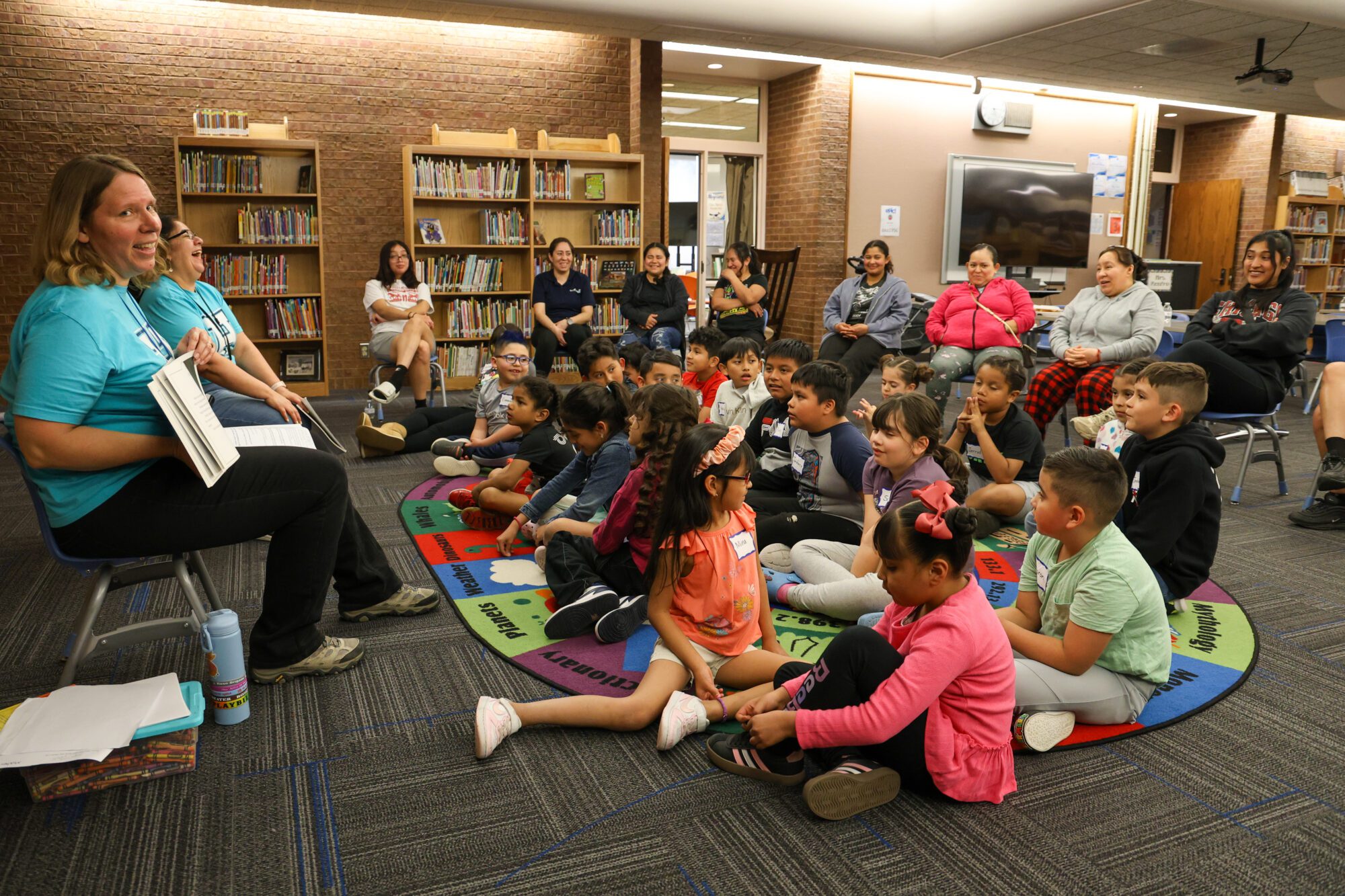
Cover photo: A Prime Time reading workshop in Nebraska, run by Humanities Nebraska. Photo courtesy of Humanities Nebraska.
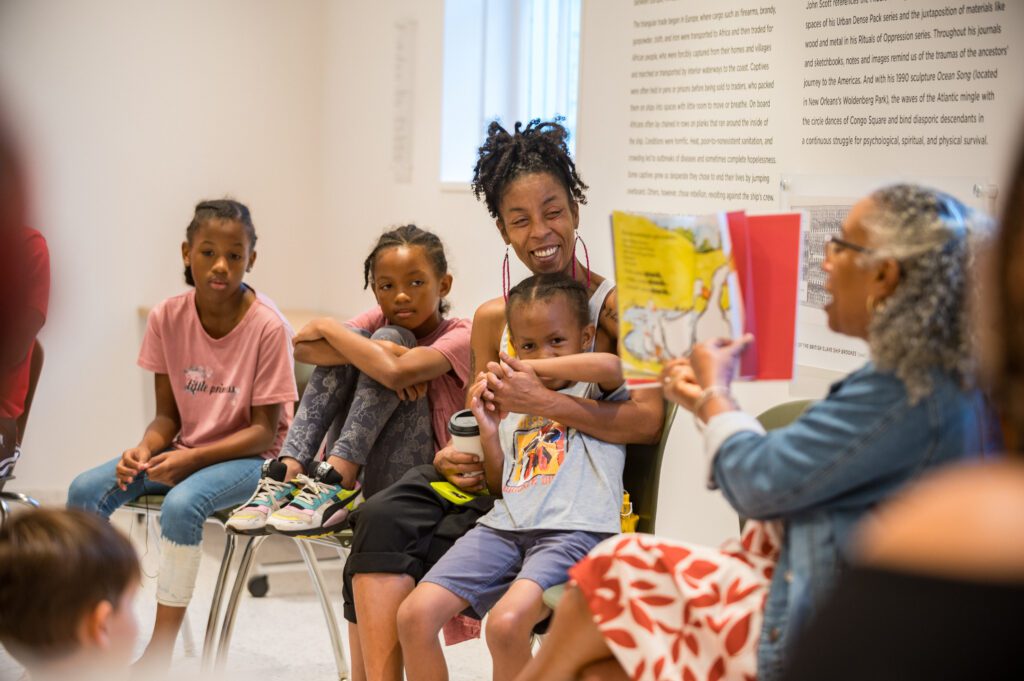
A stand-out example is the Prime Time program, which fosters early childhood and family literacy through workshops that teach and encourage families with preschoolers how to read together at home. Created by the Louisiana Endowment for the Humanities, and now implemented in six additional states thanks to humanities councils in Delaware, Iowa, Kentucky, Nebraska, New Jersey, and Washington. A recent landmark five-year study proved that Prime Time is a catalyst for improving early literacy and school readiness. The findings validate the program as a premier, “best-in-class” national model for family engagement.
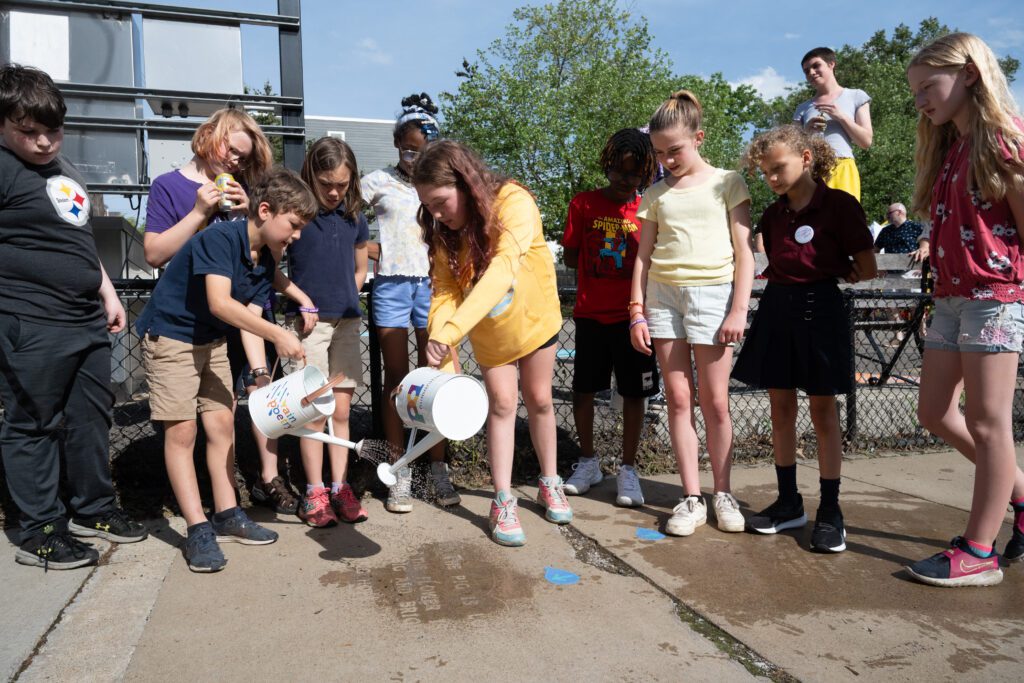
In Pennsylvania, PA Humanities gets elementary schools students excited about reading and writing poetry through their whimsical and creative Rain Poetry program. With the support of local poets and teaching artists, students learn about haiku, then write their very own poems. Selected haiku are then “published” on the sidewalks of neighborhood public spaces with a special water-activated solution that make the poems appear when you add water. Each installation gets its very own community reveal celebration, inviting families, friends and neighbors to connect and celebrate the work of young people.
At an installation celebration in Pittsburg, fifth-grader Christopher Busby told a reporter how what it felt like to see his words displayed at the local park: “It actually feels pretty good. I never thought I would get this kind of accomplishment this young into my life.” His classmate Aliana Mason proudly said that “If any of my friends come by, I hope they see it. And I’m going to brag to them, ‘I’m a famous artist now. My work is on the sidewalk.’”
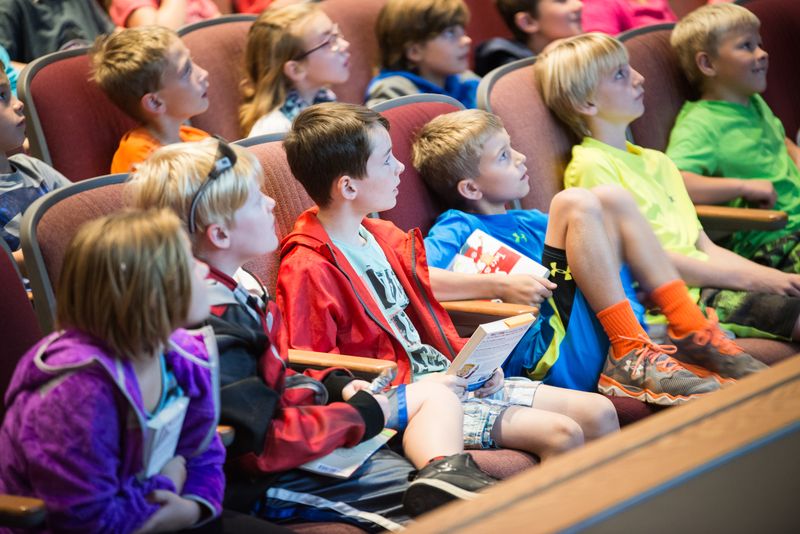
Every year (since 2014), the South Dakota Humanities Council (SDHC) selects a book to give to third graders across the state through their Young Readers program. The third graders receive their own book and opportunities to interact with the author or illustrator, while their educators receive classroom materials to support the reading curriculum. SDHC began the program just giving out just a few thousand books each year, but thanks to private donors, their reach grew. In 2024, the South Dakota Humanities Council reached a milestone when they gave a book to every single third grader in the state; that’s 14,000 students in 381 schools!
Why third graders? SDHC says they focus on third graders to help shape powerful learning habits and increase youth reading achievement levels when they’re the most impressionable. When children move into fourth grade lacking an adequate foundation to be independent, they have a higher likelihood of dropping out of high school, reducing their potential earnings and chances for success.
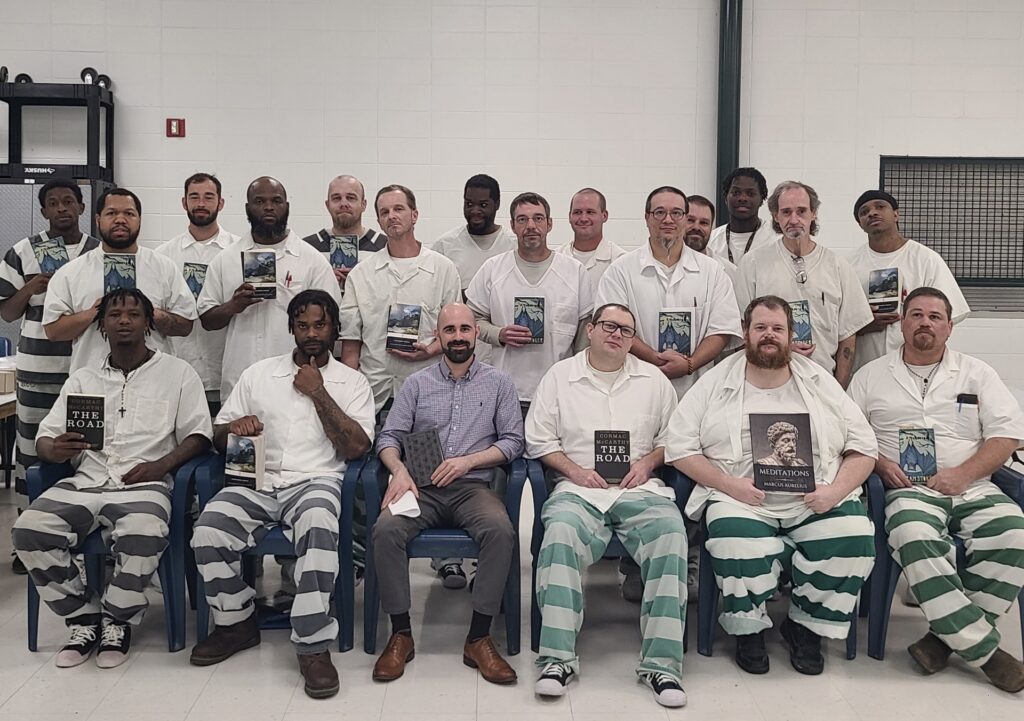
The Maine Humanities Council and Mississippi Humanities Council both run life-changing book clubs for incarcerated men and women in their states. These books clubs, facilitated by outside scholars in Mississippi and incarcerated volunteers in Maine, show the power of access to literature and literary discussion. The book clubs provide essential mental stimulation and community.
In a news article on one of the Mississippi books clubs, facilitator Alan Huffman described the impact reading together has on the club members: “Books are the vehicle for them, not only to be entertained when they have long periods of downtime, but to find sort of clues to how they can turn their lives around,” Huffman said. ” That’s a common topic of discussion in the clubs, every book that we read, they relate to on a very personal level, and probably more so than most people.” In a podcast episode, another Mississippi faciliator, Will Underland, emphasized that these books clubs are all about “creating opportunity and access,” introducing people living in prison to the kind of intellectual stimulation that comes from reading. He sees a “culture-wide hunger for the arts and humanities” both in the college classrooms where he teaches and inside state prison walls.
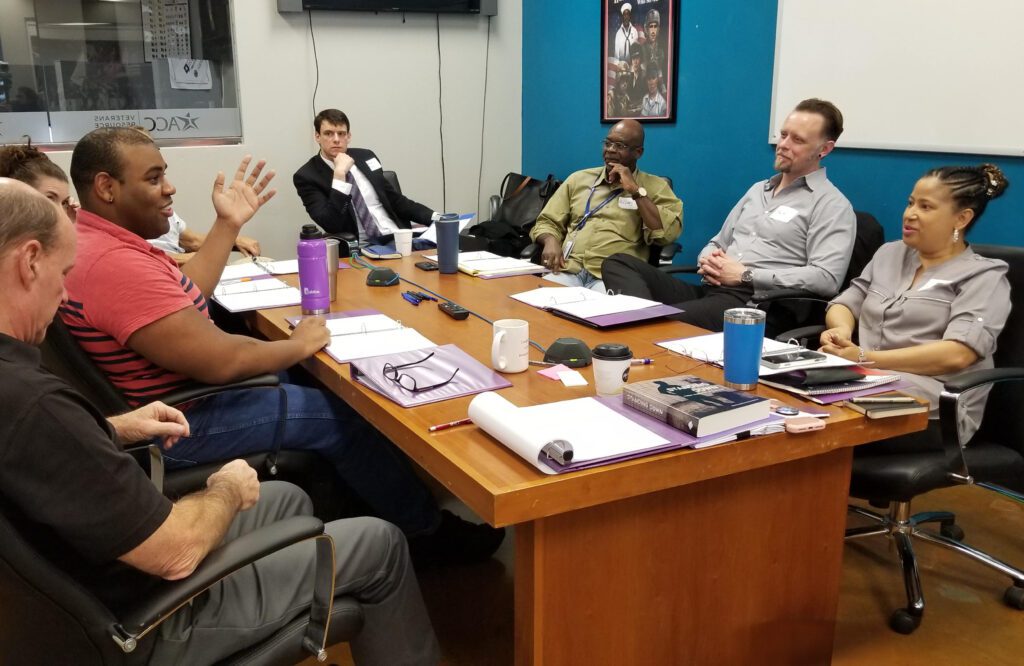
In Texas, the canon of literary texts on war and military service—from the Odyssey to the contemporary poetry—underpins a program from Humanities Texas designed to get veterans talking to each other about their experiences and the impact of military service on their lives. The Veterans Voices reading groups invite veterans, their family and friends, and other interested civilians to read excerpts of literature out loud and have a conversation guided by a trained facilitator. Participants can attend multiple sessions or just join once, and there’s no advance reading or preparation required.
In a podcast episode, program director Melissa Huber describe how the initiative was originally founded by a Vietnam veteran, Paul Woodruff. Woodruff was a Vietnam veteran who struggled with readjustment when he returned from Vietnam and found a kind of solace in the Odyssey. He partnered with a former Army Ranger to create this reading and discussion program in the hopes of offering other veterans a literary channel for reflection and opening up.
These are just a few of the many examples of programs humanities councils run or fund through grants to increase access and engagement with books and reading among all ages and demographics.
Again, let me reiterate: humanities councils have proven, ready-to-implement solutions for declining literacy in every age group. They have the local networks and community partners needed to reach those in need of these services, to bring them together, and inspire a love of reading and learning.
What do councils need to scale up these services? Funding. Funding that has already been appropriated by Congress in a show of bipartisan support.
Congress appropriated level funding for humanities councils in 2024 and 2025. In spring 2025, actions by DOGE in April led to overnight termination of all appropriated funds to humanities councils. In FY 2025, humanities councils ultimately received less than 50% of appropriated funding, leading to devastating cuts in programming and grants for local communities. In 2026, Congress once again passed a bill with level funding for humanities councils; NEH has released less than half those funds to councils.
Now, more than ever, we cannot afford to defund the proven literacy programs and grantmaking of humanities councils.
Even More Examples of Humanities Councils Addressing Literacy and Fostering Engagement with Reading and Writing
Prime Time Family Reading Program
Delaware Humanities, Humanities Iowa, Kentucky Humanities (program retired due to funding cuts), Humanities Nebraska, New Jersey Humanities Council, Humanities Washington
Clemente Course
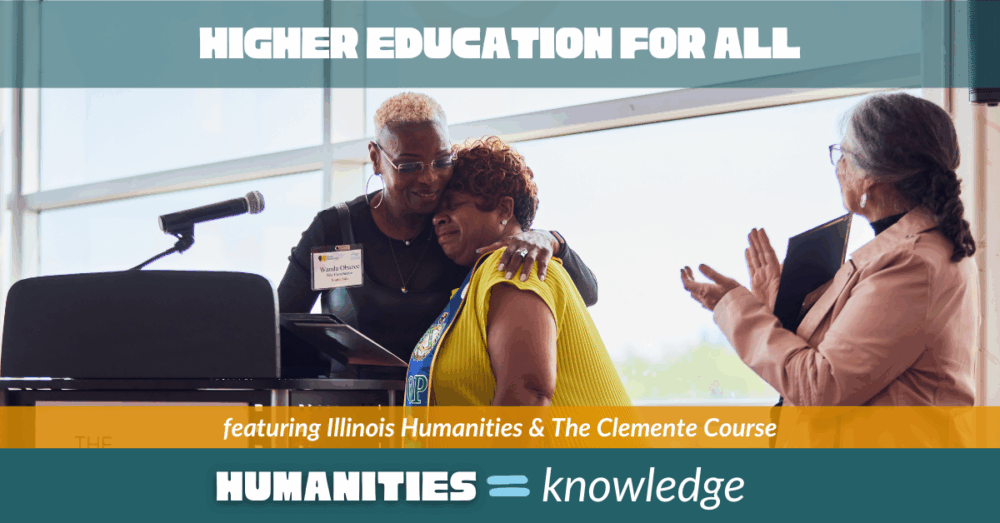
This program offers free college courses in the humanities to underserved communities including low-income adults and veterans.
Illinois Humanities, Mass Humanities, New Jersey Humanities Council, Oregon Humanities, Utah Humanities
Statewide Reads Programs
Arizona Humanities: NEA Big Read 2026-2027: The Essential Emily Dickinson
Michigan Humanities: Great Michigan Read
Maryland Humanities: One Maryland One Book
Humanities Montana: One Book Montana
South Dakota Humanities Council: One Book SD
Youth Poetry Programs
Youth Poet Laureate Programs: Iowa Humanities, Minnesota Humanities Center
Illinois Humanities: Gwendolyn Brooks Youth Poetry Awards
Reading at Community Gatherings
Mass Humanities: Reading Frederick Douglass Together
Vermont Humanities: Words in the Woods
Book Clubs
Maryland Humanities: Veteran Book Groups
North Carolina Humanities: North Carolina Reads
Book and Literary Festivals
Humanities Tennessee: Southern Festival of Books
Kentucky Humanities: Kentucky Book Festival
Indiana Humanities: Proof: A Midwest Lit Festival
Nevada Humanities: Nevada Humanities Literary Crawl
Virginia Humanities: Virginia Festival of the Book