Episode Description
Virginia Humanities has been working to connect the academic and public sides of the humanities for decades through their fellowship programs. Their newest fellowship does that by supporting faculty and alumni of HBCUs—historically Black colleges and universities. The focus at these schools is often on teaching, which means opportunities for humanities research can be limited. The HBCU Scholars Fellowship gives these humanities scholars time to focus on research projects, projects that in turn enrich the public. In this episode, we speak with current HBCU Scholars Fellow Dr. Monika Rhue and Virginia Humanities’ Yosef Medina, who runs the program. The HBCU Fellowship is supported by generous grants from the Mellon Foundation and Google.
Listen
Humanities = is available on all major podcast platforms. Listen on your browser by using the player above or find your preferred platform here.
Guests

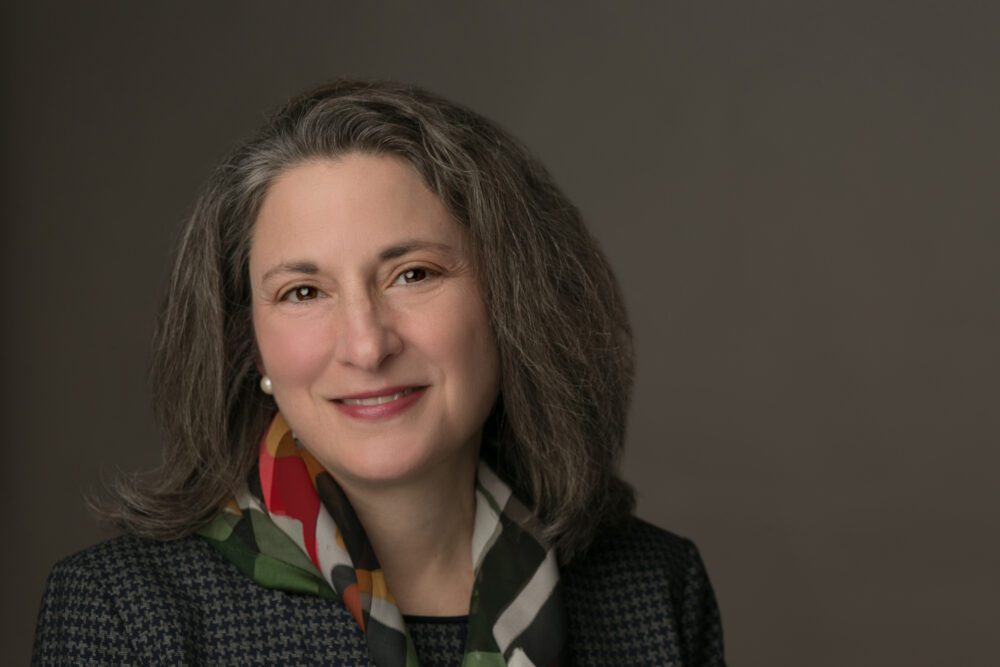
Dr. Monika Rhue
2025-2026 HBCU Scholars Fellow
Monika Rhue is an independent project manager and community archives leader. Her archival career began at her alma mater, Johnson C. Smith University, where she rebuilt the Inez Moore Parker Archives and launched the institution’s first digital preservation initiatives. Her scholarship focuses on community archives leadership and cultural memory, culminating in her forthcoming monograph, The Great Debate: Giving Archives Back to the Community. As a 2025-2026 HBCU Scholars Fellow, Monika is completing this work. She holds a master’s degree from UNC Greensboro and a doctorate from High Point University and is the author of Organizing and Preserving Family and Religious Records.
Show Notes/Learn More

Yosef Medina
Virginia Humanities
Yosef Medina is Director of Strategic Initiatives at Virginia Humanities, where he directs the HBCU Scholars Fellowship, the Cultural Resources Task Force, and facilitates engagement with the Regional Humanities Centers. He is finishing his doctorate in Liberal Studies at Georgetown University and serves on the advisory board of Rivanna Books at UVA Press and the board of the AfroLatin@ Forum. Before his current role, Yosef worked extensively in K–12 public schools and juvenile justice systems, focusing on educational success and reentry initiatives.
Founded in 1974, Virginia Humanities is headquartered in Charlottesville at the University of Virginia but serves the entire state. They aim to share the stories of all Virginians—or, better yet, find ways for people to share their own stories. They want Virginians to connect with their history and culture and, in doing that, hope we’ll all better understand one another.
Their Historically Black Colleges and Universities (HBCU) Scholars Fellowship seeks to develop and amplify underrepresented voices and research within the academy and applied humanities spaces. This fellowship helps HBCU-affiliated writers, community scholars, and faculty members with their research process through funding, access to academic publishing outlets (journals and presses), public promotion of their work, and professional community/peer support.
List of current and past HCBU Scholars Fellows
With Good Reason (Virginia Humanities’ radio show/podcast)
Make Us – With Good Reason (episode features two HBCU Fellows explaining their research, May 9, 2025)
Dr. Monika Rhue talks with fellow HBCU scholars in September 2025. Photo by Pat Jarrett/Virginia Humanities

The 4th cohort of HBCU Scholars Fellows. Sept 2025.

What are Humanities Councils?
Our nation’s 56 state and jurisdictional humanities councils are nonpartisan 501(c)3 nonprofit organizations established in 1971 by Congress to make outstanding public humanities programming accessible to everyday Americans. Councils are funded in part by the National Endowment for the Humanities (NEH) and connected by their national membership association, the Federation of State Humanities Councils.
Episode Transcript
Read Episode Transcript
Hannah Hethmon (Narration): You’re listening to Humanities =, a podcast about real individuals, organizations, and communities making a real difference through the humanities.
I’m your host, Hannah Hethmon.
Humanities = is a production of the Federation of State Humanities Councils.
Public humanities and academic humanities are often depicted as separate or opposite parts of the cultural sector. In reality, the work of scholars and researchers is invaluable to our collective knowledge base, and without public humanities that knowledge won’t reach the people who can benefit from it.
Virginia Humanities has been working to connect these two sides of the discipline for decades through their fellowship programs. And their newest fellowship focuses on faculty and alumni of HBCUs—historically Black colleges and universities. The focus at these schools is often on teaching, which is great, but it means opportunities for humanities research can be limited. The HBCU Fellows Scholarship gives these humanities scholars time to focus on research projects, projects that in turn enrich the public.
To learn more about this fellowship, I spoke with Yosef Medina, who runs the fellowship for Virginia Humanities, and Dr. Monika Rhue, a current fellow in the program. Dr. Rhue holds a PhD in education and a Master of Library and Information Science. She started her academic career as an undergraduate at Johnson C. Smith University, an HBCU in her home state of North Carolina.
Dr. Monika Rhue:
I’m Dr. Monika Rhue. I’m a graduate of Johnson C. Smith University. I’m a project manager in the archive and library space. I just finished a project with UCLA called Archiving the Age of Mass Incarceration. And I’m proudly a recipient of the Virginia Humanities HBCU Scholars Fellowship.
Yosef Medina:
I’m Yosef Medina, Director for Strategic Initiatives at Virginia Humanities, and I also lead the HBCU Scholars Fellowship.
Hannah:
So Yosef, what is the HBCU (Historically Black Colleges and Universities) Scholars Fellowship at Virginia Humanities and who does it serve?
Yosef:
Absolutely. the simply put the HBCU Scholars Fellowship is a resource for HBCU faculty and affiliated scholars to pursue their projects and advanced research.
If you’re a scholar that is affiliated with HBCUs and is interested in the humanities or related fields— social sciences, cultural studies, language—and you have a project that you’re looking to further and to actually connect to the public, connect to the community, I would say that the HBCU Scholars Fellowship is right up your alley.
You know, traditionally we only served folks within Virginia, but we’ve moved beyond that model now to national landscape. And so, we’re just really interested in amplifying underrepresented voices in the academy and also underrepresented research because there’s oftentimes a void when it comes to projects that are interested or looking into communities of color, the Afrodiasporic lens and experience. And that’s what we’re sort of here to fill that void.
We have two options. So, there’s a short term opportunity for the fellowship, whereas people can come in from three to six months. And we did that because knowing the nature of HBCUs, most HBCUs are teaching colleges. They’re not research based institutions. And that’s for a myriad of reasons, but we won’t get into that right now. But sometimes the only time that HBCU faculty can do research is over breaks, like over the summer or over the winter. And so we want it to be flexible in that. But then the more traditional route, and what most people opt in for, is a 9-12 month fellowship opportunity. And we pay folks on a monthly basis. We provide a monthly stipend, but then there’s also periodic engagement opportunities throughout the fellowship. Where the fellows can do professional development trainings. We just had one earlier that Monika maybe could talk to. We do writing retreats, and we also work with the scholars to sort of, if they’re interested in submitting or securing a book contract, we connect them with presses. So, there’s a whole host of opportunities that really revolve around networking, but then also ensuring that they can mature in their career track.
Hannah:
So, this is a podcast about public humanities. And public humanities, what humanities councils do is often defined in opposition to academic humanities. And we know that’s a false dichotomy. Those aren’t mutually exclusive. But you know, when we think about this fellowship, we think about academia. That’s the first thing that comes to mind. It’s about people who work at universities. So how does this fellowship fit into the mission of Virginia Humanities, which does public humanities?
Yosef:
For sure. And I think Virginia Humanities is unique in that we’re also headquartered at the University of Virginia, which is an R1 institution. So, our work oftentimes straddles the line between academic and public, which is why we even have this opportunity available, because we’ve been hosting fellows since the 1980s to produce academic research and what have you. But I would say that the way that we ensure this fellowship fulfills our public mission is by requiring the fellows to present their work publicly at a local cultural institution. So that could be a museum, a library, an archive, a community center, or other public forum, but then also by participating on our public radio show and broadcast, With Good Reason. And so, we’re also partial to projects, partial to supporting projects that have public resonance to the communities that we serve. So I would say all of that informs how we relate to the public through this fellowship opportunity. Although it is academically focused, there are a number of touch points that make sure it’s relevant and that it translates to the community.
Hannah:
It seems it’s really about, kind of making sure there’s that back and forth and that, you know, the public humanities can fill in some of these gaps. Like you said, HBCUs don’t always have that, infrastructure for research projects like this. And then you want that research that people are doing to go back to the public and to be available and to make sure that there’s this constant feedback between the two. So, Monika, you have a very public oriented project. Can you give me that high level overview of your fellowship project and how you plan to spend your time in the fellowship?
Monika:
My project focuses on my research, “Searching for the Community Archives Leadership Model.” And so that research focused on working with archivists and librarians. I had the opportunity to interview them, to actually learn from them some of the resources, the leadership training, you know, what do they need to actually engage authentically when it comes to doing community archive work?
And so basically what this fellowship is allowing me to do is to expand upon that research, you know, lifting those voices, being able to share my experience as a project manager. So actually, this fellowship will allow me to create a digital humanities book that include my research, but also expand upon my research for an example, including foundational information when it comes to African oral history that is not considered part of archives, but when you think about traditional practices of African and African-Americans, oral history was one of the ways in which they not only share their history, but also preserve.
And the ultimate goal is to really think about a community archive leadership framework for professional archivists and librarians who do this work. And also posing and jumpstarting another conversation about what does it mean to give the archives back to the community?
So, my book is entitled, The Great Debate: Giving the Archives back to the Community and uplifting those interviews through storytelling. I want to be able to do something a little bit different, not a traditional book, but I really want people to hear from the people who are actually doing this work. So, uplifting their voices and being able to do a digital humanities book will allow me to do that. And also talk a bit about my project, “Archiving the Age of Mass Incarceration” as a case study of how these different ethnic groups came together to uplift the voices and the stories of mass incarceration among people of color. And so, this is a great opportunity to allow me to merge my dissertation, my research into a book. And so, the fellowship has allowed me the time to be able to spend on working on this digital humanities book.
Hannah:
Great, and can you just say a bit more about what a community archive is? What does that mean for people who listening who may have a sense but don’t know exactly?
Monika:
So, when you think about archives and how it started in America, you also got to think about the perspective of not just vital records, but also how most of the archives were shaped by the elite. And most of the early part of the archives actually did not represent, especially mainstream archives, represent people of color when they’re talking about their culture experiences or their heritage or preserving that. And so, this is why community archives come about, because communities—especially people of color feel—that their stories are not represented in these archives or the narratives that are preserved in these archives are not correct. Especially when you think about how some of the descriptions are being described in these archives, it doesn’t represent the people of these communities accurately.
And so, when we think about community archives, it gives those in charge of preserving their own stories through their own lens. It could be orally, it could be performative, it could be just beyond textual, but giving them the empowerment to share their own narratives and preserve their own narratives. So, when we think about community archives, you’re thinking about communities coming together to do just that, to preserve their history through their voices, through their lens, that represents who they are as a people and as a community.
Hannah:
What do you hope your project gives back to these communities? What do you hope that people who are working in community archives, who are trying to tell this story from a grassroots perspective, from a community-level perspective, what do you hope they get from the work that you’re doing?
Monika:
My main audience are archivists and librarians. And I really want us to rethink our profession. Like how do we engage the community authentically? How do we empower the community to be able to be a part of some of our practices like describing records, the appraiser records? How do we really involve the community in that aspect so that their voices are uplifted in these archives?
Too many times we partner with these with these community archives, but we don’t include them in the process of really describing these records so that their voices are actually uplifted and making sure that the narrative is correct. So, one of the things that I hope that my book will launch is a discussion about that, a discussion of how do we change the structural biases that are in our profession. And let’s have some sincere conversations about that.
And the way I’m aiming to do that is interviewing activists and librarians to see, ok what is needed? What is missing? How do you walk into a community that may not represent your cultural background? What are some of those protocols that you need to be mindful of? So really coming up with a framework, just for my years of doing this work, but coming up with a framework to train future archivists and librarians to how to really authentically engage in community archive work.
Hannah:
Fascinating. All right, so going back to the program as a whole, Yosef, you tell me what some the other HBCU fellows have worked on and the impact they have? Just some examples of to you that sort of represents what this program does.
Yosef:
We’ve had a range of topics from explorations into Black Freemasonry, cross-racial coalitions during the Reconstruction era and how that applies to today. Black motherhood in colonial Haiti, Black diasporic politics during the Harlem Renaissance, topics related to poetry, social justice.
I would also say for those that are interested to visit our website, virginianhumanities.org, because there you can actually view all of our prior fellows’ topics and listen to their podcasts and radio shows..
Hannah:
We’ve given a lot of reasons why this fellowship, this HBCU fellowship, is important. But let’s say you’ve got a chance to stand up in front of the world, funders, advocate supporters, and make the case. Why is this important?
Yosef:
I believe this fellowship is critically important because, like I said earlier, there’s, there’s a scarcity of such opportunities on the national level. And I think at this time, when the power of disciplines like the humanities are truly needed, they’re being cut back at the same time. Having a fellowship, having an opportunity where this kind of research and these kinds of projects and questions can be supported and also cultivated is very timely, but also critically important, not just to academia, but to public life in general, which is really the mission of the humanities councils…is to connect each other’s stories, right, and to better inform the populace and the citizenry of our interconnectedness. And so, I think this fellowship does that exactly.
Monika:
And I guess the only thing that I would add is…I reflected back on my time as the board chair for the HBCU Library Alliance. And I had the opportunity to work with a lot of librarians and archivists and hear some of their concerns. And one of the major things, this is my personal experience as well, is that we do the work, we’re on the ground, we’re doing the ground work, we’re lone rangers in our own archives. We’re helping community archives learn how to preserve their own community histories. And so, we’re doing what I call the practical work, our practical knowledge, our lived experience. But because many of the HBCUs or sometimes underfunded and under-resourced, we do not have the opportunity often to contribute to the scholarship.
And so, this fellowship is so important for individuals like myself who’ve been doing this for 20 plus years, but doing the practical work, but now [have] the opportunity to contribute to the scholarship. And I think this is very important as well because when we share our lived experience and also have the opportunity to contribute to the scholarship, we then get the opportunity to have a broader voice of what needs to change within our profession. And oftentimes when we’re not able to contribute to the research or the scholarship, our voices are also left out as far as what needs to be changed. What can we do better as a profession? So fellowships like this is so important for HBCUs because then we get the opportunity to pause, to have the time, and to contribute to the scholarship, which I believe is missing on a broader scale because we just are focused on just doing the work.
Yosef:
Well said. I want to just make a plug to say that applications are now open through March 1, 2026
Hannah:
Okay, so if you are an alum or current faculty at an HBCU, this is your time to apply.
Hannah (Narration): Thanks for listening to Humanities =, a podcast from the Federation of State Humanities Councils. You can learn more about the humanities councils and programs in this podcast, see episode transcripts, and explore additional content on our website, statehumanities.org, that’s statehumanities.org.
Our nation’s 56 state and jurisdictional humanities councils are nonpartisan nonprofit organizations established in 1971 by Congress to make outstanding public humanities programming accessible to everyday Americans.
If you’d like to learn more about your humanities council or support their work through a donation, you can do so at statehumanities.org/directory or by searching your state name + “humanities council.”