
Episode Description
Illinois Humanities believes education is liberatory and should be accessible to all. That belief led them, 25 years ago, to partner with The Clemente Course in the Humanities to offer free college courses to low-income adults in the Chicago area through a program called The Odyssey Project or Proyecto Odisea. In this episode, learn more about this program and how it changes lives. Our guests are Dulce Maria Diaz (Odyssey Project alumnus), Dr. Rebecca Amato (Director of Teaching and Learning, Illinois Humanities), and Dr. Aaron Rosen (Executive Director, The Clemente Course in the Humanities).
Listen
Humanities = is available on all major podcast platforms. Listen on your browser by using the player above or find your preferred platform here.
Guests

Dulce Maria Diaz
S.H.E. Gallery
Dulce Maria Diaz is the founder of S.H.E. Gallery (Sharing His Energy Gallery) and an adjunct lecturer for the Art Institute of Chicago. She leads mural art clubs with Chicago Public Schools and is part of the Beauty Turner Academy of Oral History with the National Public Housing Museum.
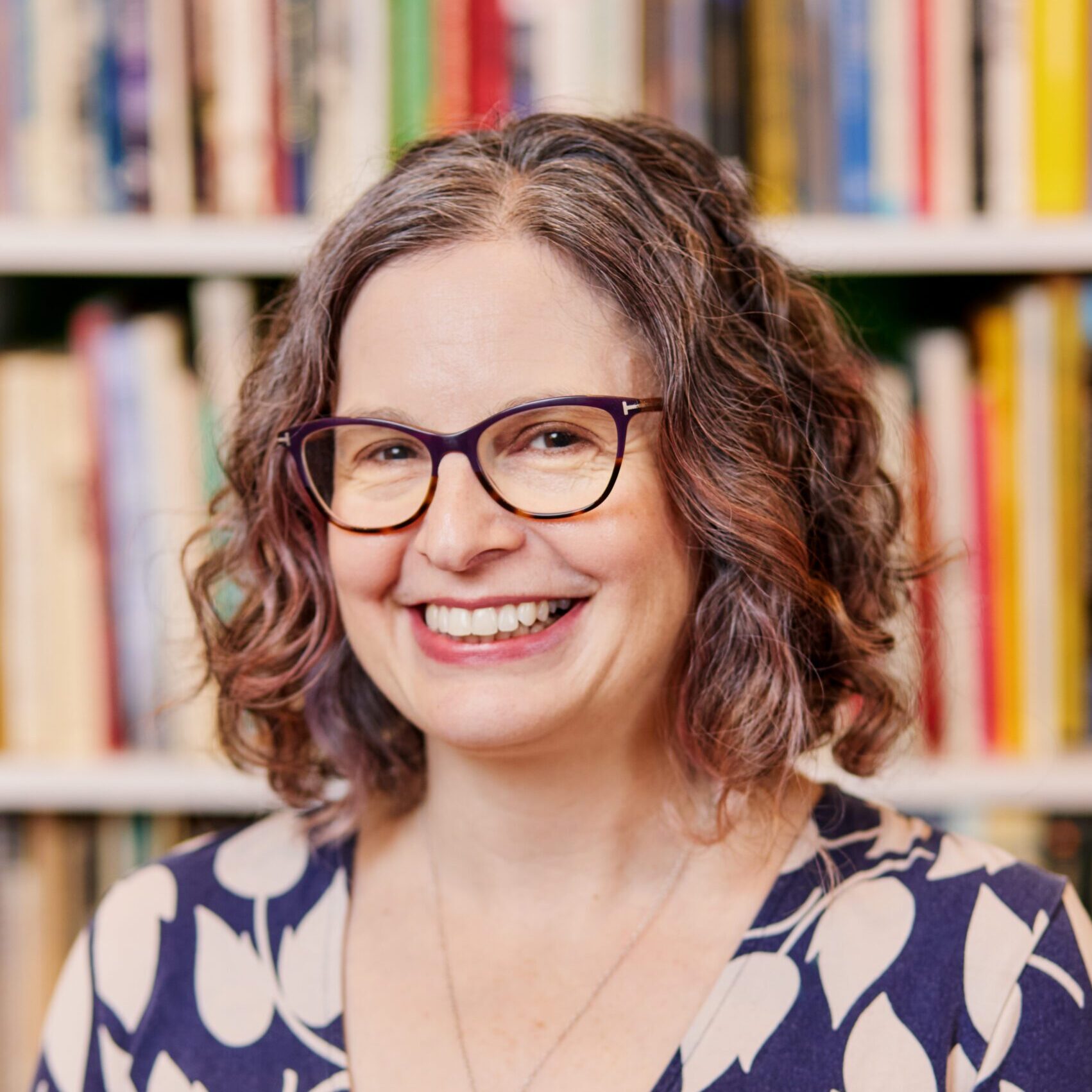
Rebecca Amato
Illinois Humanities
Dr. Rebecca Amato is Director of Teaching and Learning at Illinois Humanities. Her work focuses on mobilizing the public humanities for social justice advocacy. She holds a PhD in United States History from The Graduate Center of the City University of New York.

Aaron Rosen
Clemente Course in the Humanities
Aaron Rosen, PhD is Executive Director of the Clemente Course in the Humanities, educating underserved communities, Visiting Professor at King’s College London, and founder of the non-profit Parsonage Gallery in Maine.
Show Notes/Learn More
About Illinois Humanities/The Odyssey Project
Illinois Humanities is a statewide nonprofit organization that activates the humanities through free public programs, grants, and educational opportunities that spark conversation, foster reflection, build community, and strengthen civic engagement for everyone in Illinois.
The Odyssey Project is a free college program that empowers adult learners to jump-start their education in a supportive community of students and educators. Students who enroll in The Odyssey Project/Proyecto Odisea find a welcoming and supportive intellectual community, as well as a firm foundation in the humanities. Courses take place from August through April and are made up of interdisciplinary humanities subjects that may include literature, philosophy, U.S. history, art history, critical thinking, and writing. A committed and creative group of professors from Chicago’s local universities guide Odyssey/Odisea courses, while students who complete the program earn up to 11 college credits in the humanities from the University of Illinois Chicago.
About The Clemente Course in the Humanities
The Clemente Course in the Humanities provides a transformative educational experience for adults facing economic hardship and adverse circumstances. Their free college humanities courses empower students to further their education and careers, become effective advocates for themselves and their families, and engage actively in the cultural and civic lives of their communities. Find a full list of courses here.
Links and More
S.H.E Gallery (Sharing His Energy Gallery)
“Your Odyssey Begins Here: Three alumni on why you should restart your education with the Odyssey Project” (Illinois Humanities)
“Passing the Torch” (on 2025 Odyssey Project graduates, Illinois Humanities)
Below: Dulce speaks at the Illinois Humanities 50th Anniversary Gala in 2025.
Dulce was a featured speaker at Illinois Humanities 50th Anniversary Gala in 2025.

Dulce’s certificate and graduation sash from year 2 of The Odyssey Project.

A student celebrates graduating from The Odyssey Project in 2025.
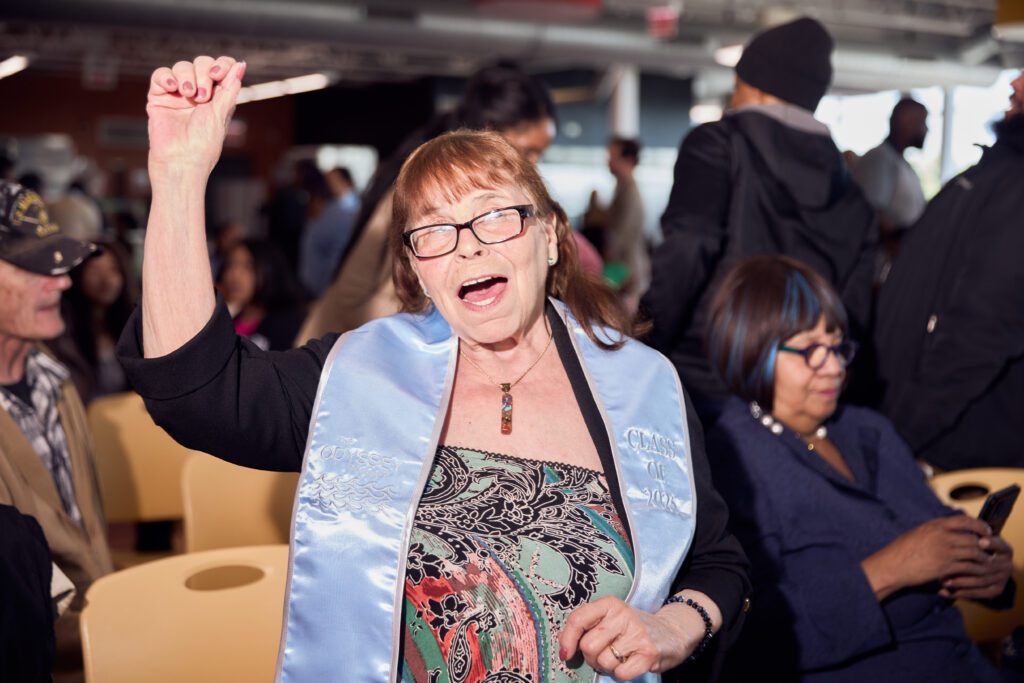
Celebrations at the 2025 Odyssey Project graduation ceremony.

What are Humanities Councils?
Our nation’s 56 state and jurisdictional humanities councils are nonpartisan 501(c)3 nonprofit organizations established in 1971 by Congress to make outstanding public humanities programming accessible to everyday Americans. Councils are funded in part by the National Endowment for the Humanities (NEH) and connected by their national membership association, the Federation of State Humanities Councils.
Episode Transcript
Read Episode Transcript
Hannah Hethmon (Narration): You’re listening to Humanities =, a podcast about real individuals, organizations, and communities making a real difference through the humanities.
I’m your host, Hannah Hethmon.
Humanities = is a production of the Federation of State Humanities Councils.
Illinois Humanities believes education is liberatory and should be accessible to all. That belief led them, 25 years ago, to partner with The Clemente Course in the Humanities to offer free college courses to low-income adults in the Chicago area through a program called the Odyssey Project or Proyecto Odisea.
In this episode, we’re gonna learn more about the Odyssey Project, and you’ll hear from a Dulce Maria Diaz, an Odyssey Project alum; Rebecca Amato, Director of Teaching and Learning at Illinois Humanities; and Aaron Rosen, Executive Director of The Clemente Course, the national partner for Illinois Humanities and organizations in 15 other states who offer these free college courses.
We’ll start with Dulce, who started Odyssey Project in 2020. Today, Dulce is a Museum Educator at the Art Institute of Chicago—an opportunity she found thanks to the Odyssey Project—and the founder and curator at S.H.E gallery, which celebrated its 10th anniversary this year.
Dulce Maria Diaz:
My name is Dulce Maria Diaz. I am an Odyssey project, Illinois Humanities Odyssey project alumi. I’m founder of S.H.E. Gallery – Sharing His Energy Gallery, an arts and education nonprofit in Chicago.
Hannah Hethmon:
All right, so Dulce, tell me a bit about yourself and where you were in life and what was going on when you found out about the Odyssey project and decided to apply?
Dulce Maria:
Yes, so I was born in Mexico in a small town called Tumbiscatío de Ruiz in Michoacán, Mexico. And we migrated to the United States in October of 1988. I was always a nerd. I was always educating myself even when school was off. And at some point in high school, I had gained an opportunity to have an internship at Gallery 37 and basically have a free ride to art school. And I was just such a bad kid. I oppressed myself out of opportunities from not having the support in the family, from coming from a broken home. So, I became a paralegal, working specifically for workers’ compensation, that people got hurt at work or personal injuries. So was already helping people in my life and I always use arts and education, self-education mostly, to help heal myself growing up in the South Side of Chicago. But yeah, as I continued my role in doing good work as a paralegal, I did that work for 20 years…
So, I was going through a lot of life challenges, and I was having a series of dreams. I’m a very spiritual person. And that’s what led me to study business for artists through the University of Chicago with a partnership that they had with the Hyde Park Arts Center. So that’s what led me to start this nonprofit. What kind of started as a hobby, as wanting to highlight what was going on in these communities and how people in the streets trying to survive were using graffiti as an art form. So, I became very involved in using my arts and education nonprofit and educating people on both the graffiti art and what was going on in the street. Just, you know, oppression overall and touching on other subjects like sexual assaults, domestic violence, and really it became a like economics thing, like supply and demand where the community was now and still is reaching out about things that they want to do, that they want to showcase, you know, so I’ve become sort of a platform for that. And when oppression got so bad in the legal field where it was like not really a hobby anymore…
Working with an attorney that was a very difficult attorney, but he believed in me during the pandemic. He paid for some classes at the University of Chicago for writing, professional writing, and I was like, I really love school. I asked if there were any free programs or anything that was free schooling because I never, I wasn’t able to afford a degree. I did everything that I needed to do to look good on paper and do good work, but I didn’t have a degree. And that’s when I learned about the Odyssey Project. And it was like a whole new world, being in those classes that started Zoom because of the pandemic. You know, the world was changing outside and my world was changing inside. I was in these classroom settings where I didn’t feel intimidated, especially just coming from the University of Chicago where that instructor, like you can feel very small easily, where you can shut down to education. And I think that’s what happens systematically. They make you feel, you like you don’t belong or like you’re too small. Like that’s just not somewhere that you need to be. And the Proyecto Odisea/the Odyssey Project was like a dream come true where you come as you are. And it’s not about getting this right. It’s about coming together and having real conversations about real history, the history that we actually lived. So, it helped me personally…self-esteem…helped me get back completely just into arts and education—where I haven’t been a paralegal since 2022.
Hannah:
Thanks, Dulce. So, Rebecca, would you introduce yourself and tell us about the Odyssey Project and how it works?
Dr. Rebecca Amato:
I’m Dr. Rebecca Amato. I’m the Director of Teaching and Learning at Illinois Humanities and the Academic Director for the Odyssey Project/Proyecto Odisea in Chicago, which is a Clemente course.
So, the Odyssey Project/Proyecto Odisea is a program of Illinois Humanities. It’s a core program. We’ve been around for 25 years. We actually graduated our 25th class in May. We believe that education is liberatory and everybody should have access to it. It’s a program that’s free. That’s the most important part. It’s free. It’s humanities-based college accredited program for adults who live at or below 150 percent of the federal poverty guidelines and who have not had access or have had limited access to higher education in the past. So, our students come from many different backgrounds, many different parts of the Chicagoland area, and they come to our classes at four different sites across the city—Northside, Southside, Southwest side, and downtown—in their own communities for the most part to be part of a learning environment and pursue their education.
Hannah:
And these are college accredited courses, right? So, people get college credit for attending.
Rebecca:
Yeah, so they’re college accredited courses. Our credits come from the University of Illinois Chicago. And our students earn up to 11 credits for participating in a three-semester sequence.
Hannah:
Great. So now we’ll jump back to you, Dulce. What were the classes like?
Dulce Maria:
Year one was fascinating because we’re all in these Zoom screens. Being in school via Zoom felt very modern. And then the topics that we were talking about felt very liberating. So, it was nice. It felt like I was in a safe space. So, it helped me with being able to speak up, being able to feel inclusive. We read a lot of books, a lot of literature, and I love books. I’m a bookworm.
So, half of it to me personally for me was where the topics in the books, the literature, the characters that we studied and then the other half was the actual classmates and the teachers. So, you have your teacher who’s touching on a subject, but you also have like a personal mentor. So, you feel fully supported. Like Becky mentioned, everything is completely free. They ordered the books for me. The books get mailed to me.
So, starting with Zoom, that was amazing. And then the second year I went downtown and the second year was all on kinship, which was wow to me because I do have issues with my family and maybe a lot of us do because everybody’s just been fighting, right? But like the perspective on kinship, the way that it was taught and like having that time of having an entire semester dedicated to it, all of that was really enlightening. And then I had the opportunity to be class speaker, at a time when my father was in the hospital, speaking on kinship. It was just very appropriate. The books that we read again, it just, yeah, it helped me see that I’m not alone.
Hannah:
Hmm. Yeah, that’s the power of the humanities, right?
Dulce Maria:
Yes, the power of the humanities.
Hannah:
So being in this program has opened some doors for you. Can you talk about, you know, the opportunities it opened up to you that led to where you are now and how it’s affected your plans for the future or open doors for the future?
Dulce Maria:
Yeah, so being an Odyssey Project alumni, Becky keeps in touch. She makes sure that she outreaches. And then I’ve gathered and made community with other alumni.
Part of being an Odyssey project, you have the opportunity if you go through year one and year two, after that you have the opportunity to apply for like kind of like a continuing education, a non-credited course at University of Chicago, completely paid for, and it is liberal arts. So again, we’re touching on philosophies, humanities, Plato, I mean, it’s just, it’s the best of higher education. It’s so rich. And I’m on year three now. I absolutely love it. It’s like going back to the things that I was studying in high school. So, I was in leadership programs in high school. I was president of the student council. It’s kind of like giving me a second chance. Yeah. So again, working at the Art Institute, the connections that I’ve made, having an opportunity to stay in touch and be here with you guys today.
Hannah:
So, Rebecca, I’m going to now turn back to you. We’ve heard why one person, how one person is so impacted by this program, but why is it important to give people access to college-level humanities courses versus, you know, maybe more informal learning? And, you know, even if the goal is not a degree, how does this kind of access to this higher education impact people?
Rebecca:
Human beings have innate curiosity and don’t always have ways to pursue that curiosity in community with other people. The adults that we work with are some people who don’t have that access on a regular basis for a variety of reasons. And so, our program is kind of a rare one in which our investment of time and energy in our classes is in the humanities, in the things that make us human, the things that allow us to explore our opinions, our thoughts, our civic identity, our creative expression.
A lot of the opportunities for adults that exist in the world, in terms of adult education, are vocational and workforce development. They’re sort of dedicated to becoming an economic actor, which is important. It all is important, but it sometimes sets aside the importance of who we are as human beings and, you know, again, our innate curiosity and innate abilities. And so, I think that that’s one of the most important things about a program like Odyssey is it creates a learning community where people can sort of affirm that for each other and develop their own confidence and leadership abilities, which they take out into the world.
And I don’t mean to say that Odyssey students don’t already have leadership capabilities. Many are community leaders. They’re coming to us as community leaders and they’re just growing their networks when they go out into the world during and after our classes. So, I think that’s really important. I also was just reflecting on, you know, the fact that there are things that you study in grade school and high school that just don’t resonate because you’re not mature enough to think about them or you just don’t get to hear anything of interest to you that seems super relevant when you’re in those grades. And I myself, you know, did really well in United States history in high school, but I didn’t identify with it or find it directly relevant to me. And it wasn’t until after college actually that I fell in love with history and now I have a doctorate in US history. So, it took some time for me to find connections to the things that were interesting to me and that resonated. So, I think that can be true for our students too to see that what they’ve lived in their own everyday lives is historically relevant and people have been writing about it, you know, and people have been thinking about it. And it’s also things that you read about in poetry and in novels. And they may not have had access to those things or realized they were even in the world until they were in our classes.
Hannah: Hmm. Great. Now, we also have on this call Aaron Rosen from The Clemente Course in the Humanities, which is the national organization that Illinois Humanities partners with to produce the Odyssey Project. Aaron, can you introduce yourself and share a bit about The Clemente Course and its origin story?
Dr. Aaron Rosen:
Sure, my name is Dr. Aaron Rosen and I am the director of The Clemente Course in the Humanities, our national organization, which is here to support programs around the country.
First of all, it’s just a joy to be able to talk about the Clemente Course, but also to do so with someone who’s an alum of that program and someone who’s done a fantastic job leading those programs. And really what we see ourselves for as a national organization is to support and grow Clemente Courses around the country for underserved communities that need this development, this opportunity to kindle these interests in the way that Rebecca, so memorably put it. And I think the core of what we do is to provide free for-credit college courses and to do that in a way that meets the needs of students as full human beings and the complexity of who they are. So, people are—oftentimes the;re parents, they might have transportation difficulties, there might be food insecurity, and we want to meet people in locations that are trusted, safe, and theirs—that really feel like their places to meet and to have and bring college to them and then meet them where they are, as it were, with wraparound care so that they can have the transport, they can have the food, they can have that opportunity for collegiality, kinship, as Dulce was saying, they can bring all of that together in a really unique, really kind of familial sense of being partners together in learning. And so, we really want to make that experience as deep and powerful and as enabling as possible.
And that really comes out for us in our history, which is starting in 1996 with a program in New York City led by our founder, Earl Shorris, and Earl had this visionary idea, which he outlines in his book, New American Blues, that really everyone should be entitled to, as he put it, “the riches for the poor.” You know, everyone should have this opportunity to engage with the profound treasures of the humanities that everyone has, as Rebecca put it, this innate curiosity. But we just need to give people those opportunities. And so, it’s really about conjuring this kind of escape velocity for people out of circumstances beyond their control. And we really began as an intellectual movement, I would say. Earl was writing these essays, publishing books, and it just caught the imagination of public humanities leaders around the country, and programs started springing up. And so, as a national organization, our goal was, as we began to develop, is how to support what’s happening at this grassroots level and then be responsive to that kind of growth.
Hannah:
And can you briefly say a bit about the spread and availability of these courses nationwide? And I know some courses focus on different groups of people, different populations. Can you give us a sense of the diversity of the programs around the country?
Aaron:
I think that’s one of the most exciting things about Clemente is that it is so responsive to the needs of people in their communities. And, you know, one of the things that we do as a national organization is try to figure out like where are people in need and what are their specific needs? So, for instance, we’ve had a really successful Clemente Veterans Initiative and we have a great program running in Providence, Rhode Island right now by Professor Mark Santo. And one the things that Mark’s done a great job of is reaching out to veterans’ organizations, people that feel disaffiliated, people that might be struggling with PTSD and other challenges arising from their service.
And so, trying to reach out in this way and draw people in, and let them understand that this is program really tailored to their needs and their identities, and to read works of great literature and philosophy that deal with themes of moral injury or of combat and what it means to return home. And so, it’s that aspect between sort of recruiting people and getting a sense of what they want to learn and then giving them those resources and then going back out in the community and saying, okay, this is the formula that’s working, and that we think might speak to the things that you’re questioning and contemplating.
And we’ve got a number of other programs that really focus on specific communities. One is a great program in Western Massachusetts, in Holyoke, that is specifically focused on the experiences of single mothers and creating opportunities that they might be missing otherwise educationally. And again, providing that support that they really need to make that learning community work for them.
And I’m engaged in discussions all the time. It’s one of my favorite things about this job is the opportunity to just sort of endlessly collaborate and reach out to folks doing admirable work in their communities and say, how can we assist? How can we step in and meet you halfway in growing a program? And so we do a lot of listening. And some of that involves, at the moment, dealing with new Americans, people with challenging immigration stories. Another population we’re looking a lot at working with right now are people emerging from jails and how it is to help them take those first steps in a community center that really gives them a sense of what the future might look like. So, we’re constantly sort of listening, trying to figure out in this public humanities ecosystem, where can we be of service and where is an idea that really just needs the funding, the organizational support, maybe some of the mentorship and collaboration to grow a program.
Hannah:
And do you have maybe, I hate to limit you to one, but a favorite story or a memorable story from the program of an individual or something that to you just kind of sticks in your mind showing off what this really does for people?
Aaron:
Yeah, in the past couple of years, I’ve had a lot of opportunities to engage with veterans in our courses. And I remember one veteran saying to me over dinner that he really felt like the Clemente Course saved his life. And that’s about his complimentary thing that you can say about a program. But I think it emphasizes the stakes. I think Dulce brought that out in what she was saying as well, that it can make you feel less alone. That’s the fundamental thing is that there is something that—the study in the humane is not just therapy, but what it does is it allows for that depth of self-examination and to do it in the company of others who have been really beset by deep questions of meaning. And I love the idea that we’re helping to offer programs that can be life-changing, but really may be life-saving in that it gives people these opportunities.
Hannah:
Hmm. It’s interesting. It’s something that keeps coming up in talking about all these different humanities programs on the podcast. People saying this program is life-saving, this opened new doors for me in a way that is, you know, radical.
So, speaking of humanities councils. There are five, I believe, other humanities councils that run Clemente courses in their states. A lot of different organizations run them, but we have quite a few that do, that are run through humanities councils. And Rebecca, can you talk to me about what are some of the advantages of having the program go through a humanities council
Rebecca:
Yeah, think, I mean, one of the great benefits of being embedded within Illinois Humanities is that Odyssey students are connected to all of the kinds of cultural resources that exist across the state of Illinois. So, I mentioned earlier that some of our students are coming to us as community leaders. Many of them are coming to us as cultural producers as well. So, Dulce is a perfect example of that. She was an artist before she came to us and she had her gallery functioning before she came to us, but she creates opportunities for some of our students who are artists who maybe never showed their work in galleries to be able to participate in some of her shows. And then we, of course, as Illinois Humanities, are giving grants to hundreds of organizations a year, and some of those are places that offer poetry workshops or theatrical productions or you know, literary contests or there’s history exhibits, all of these kinds of things are places where we can connect our students for field trips and things like that, but they also hire. So sometimes there are jobs that exist for our students to get connected to and kind of recommit for some of them or begin a new career in cultural production and as cultural workers. So, I think that’s one of the great benefits is that we already have our finger, so to say, on the pulse of culture in Illinois, and our students are interested in that and we can we can make those kinds of networks for them quite easily from the humanities council.
Hannah:
All right, so wrapping up with a final question for everyone. If you had less than a minute or about a minute to make the case for the Odyssey Project and Clemente Course, what would you say? And we’ll go start with Aaron.
Aaron:
Well, I think we’re just in a moment that demands a literacy in the humanities more than any recent time in memory in the United States. And there’s a lot of critical thinking that needs to be done in this country. And it needs to be done not just by people in elite positions. What I want to do and what I want to see us assist with the Clemente Courses around the country is to give people the tools that they can read primary texts that are essential to being an American essential to figuring out what their rights are, who they can be in their communities, who they’re in, the ways in which they’re entitled to think and express themselves, and to go deep into those texts and then emerge from the classroom and say, you know, I’ve got the voice here to speak up and to do so knowledgeably and possibly more knowledgeably than people in positions of power. And so I think we’re just in that moment of crisis where, even if the humanities might not seem to be the most direct economic path, they’re a direct path into the questions of meaning that we face right now.
Rebecca:
I mean, I think that the life histories and experiences of the people who participate in our program have been devalued for too long and we’ve we spent a lot of time reaffirming people’s value that what they’ve experienced is important, what they think is important, how they read and how they create meaning, those things are important too.
And I think at a time, much like Aaron was saying, when we are not only continuing to devalue people, but also erasing their histories, I think it’s so important for us to have learning communities that strengthen us and I think Odyssey is one of these rare opportunities where it’s not just that we’re strengthening, you know, our program is strengthening our students, our students are strengthening us, we’re doing it together, we’re building a community that that shores up our energies to live in this world and try to imagine something better in the future and I think that’s really one of the promises of a program like Odyssey and the Clemente Courses elsewhere too.
Hannah:
And finally, we started with your story, Dulce. Let’s end with your voice. How would you make the case for this for Odyssey Project?
Dulce Maria:
Illinois Humanities is real, it’s lasting, it’s not temporary, and I think that the comfort behind the people that are behind it or the comfort levels that are brought in by the people behind it are really special and just honest.
We are very lucky to have Becky and Gabe. Like if it wasn’t for them, I don’t think I’d be as comfortable as I have been. They’ve really been there. So, thank you.
Hannah:
Great, well thank you all so much for taking the time and sharing your stories.
Rebecca:
Thanks Hannah for bringing us together.
Hannah (Narration): Thanks for listening to Humanities =, a podcast from the Federation of State Humanities Councils. You can learn more about the humanities councils and programs in this podcast, see episode transcripts, and explore additional content on our website, statehumanities.org, that’s statehumanities.org.
Our nation’s 56 state and jurisdictional humanities councils are nonpartisan nonprofit organizations established in 1971 by Congress to make outstanding public humanities programming accessible to everyday Americans.
If you’d like to learn more about your humanities council or support their work through a donation, you can do so at statehumanities.org/directory or by searching your state name + “humanities council.”
