By the People: Conversations Beyond 250
Episode Description
To celebrate the cultural confluence that has shaped Maine (or the Dawnland as it is called by the Wabanaki), Maine Humanities organized a night of food, music, and dancing called “Gather.” In this episode, Samaa Abdurraqib talks with the event’s chef and two of its musicians about the ways that cultural traditions have carried through history, are sustaining us in this present moment, and can help move us into the future. Tune in for a conversation on reconstructing Indigenous foodways, the way the banjo connects Africa and Black Americans, how traditional songs of the Levant make space for grief and expression, and so much more.
By the People: Conversations Beyond 250 is a national initiative developed by the Federation of State Humanities Councils and the Smithsonian Center for Folklife and Cultural Heritage. The By the People: Conversations Beyond 250 podcast was produced by the Federation.
There are 56 state and jurisdictional humanities councils in the US, one for every state, territory, and DC. These nonpartisan nonprofits were established in 1971 by Congress to make outstanding public humanities programming accessible to everyday Americans.
Listen
By the People: Conversations Beyond 250 is available on all major podcast platforms. Listen on your browser by using the player above or find your preferred platform here.
Episode Transcript
Host/Guests
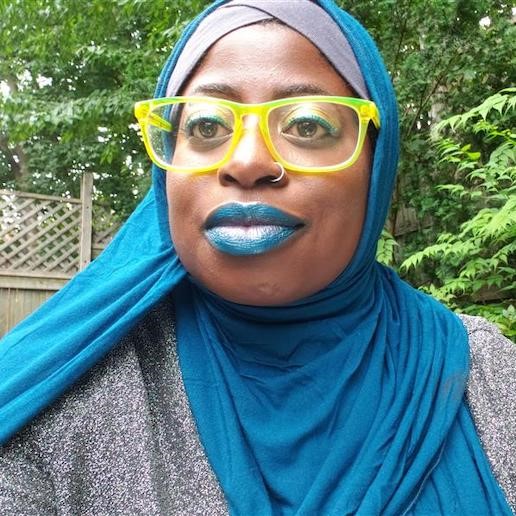
Samaa Abdurraqib (Episode Host)
Samaa Abdurraqib, PhD is the Executive Director of Maine Humanities Council. Samaa is a certified Maine Master Naturalist. She’s the editor of From Root to Seed: Black, Brown, and Indigenous Poets Write the Northeast (2023). Her poetry chapbook, Towards a Retreat, was published by Diode Editions in August 2025.

Michael Kebede
Raised in Ethiopia, Michael Kebede draws from American banjo traditions and East African music to create a sound and style uniquely his own. He has played his interpretations of folk songs and his own instrumental compositions in music halls, churches, cafes, gazebos, street corners, farmers’ markets, carceral facilities, and various porches and dooryards throughout Maine.

Zack Neptune
Zack Neptune is a Penobscot descendant and Chef/Co-founder of Katahdin Kitchen, located in Wabanaki territory of central Maine. Katahdin Kitchen is an indigenous food business focused on traditional foods catering towards Wabanaki, bipoc, and allied organizations.

Sulheya Elmutry
Sulheya Elmutry is a native Palestinian musician and came into playing the tublah (SWANA percussive instrument) through her love of Palestinian line dancing. The grounding and persistent beat of the drum has guided and connected native groups across waters and lands for centuries. (Pictured: A tublah.)
Show Notes/Learn More
Links:
Maine Humanities – Gather event page
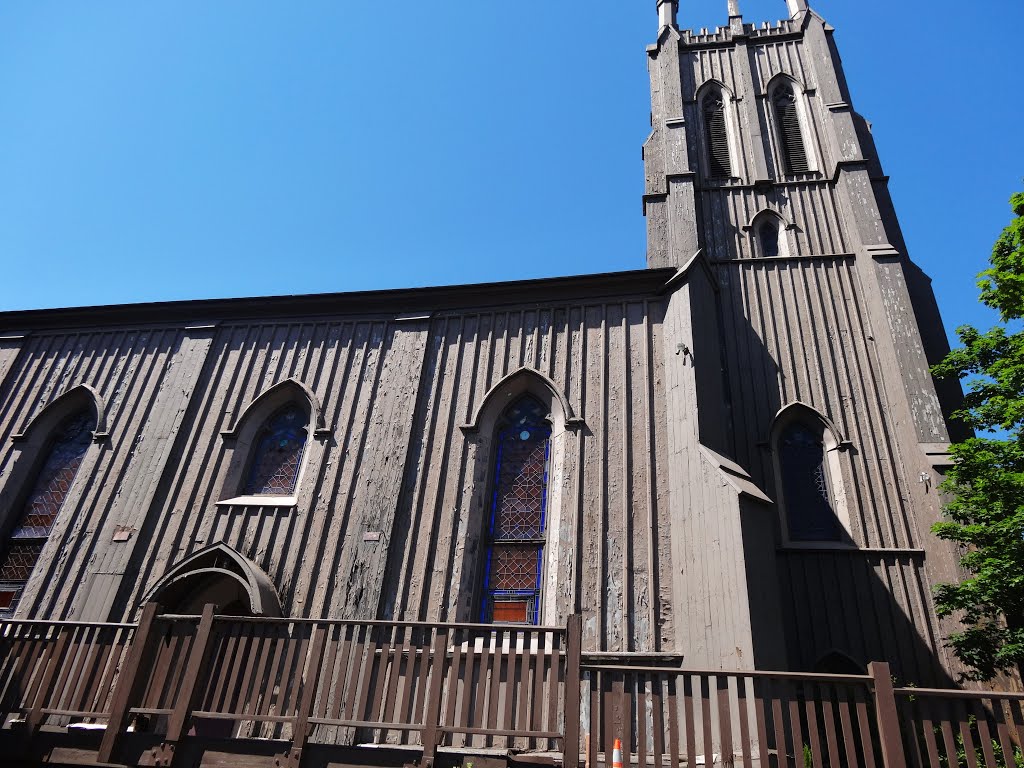
The Chocolate Church Arts Center (architectural history)
Maine Public article on Katahdin Kitchen
Michael Kebede – Indigo Arts Alliance Fellowship Profile
Video of attendees dancing dabke at the Gather event
“Wen ‘A Ramallah” (the song mentioned by Sulheya) performed by Needaa Shrara
Towards a Retreat (poetry chapbook by Samaa Abduraraqib)
“The World Keeps Ending, and the World Goes On” by Franny Choi (poem referenced by Samaa)
Photos:
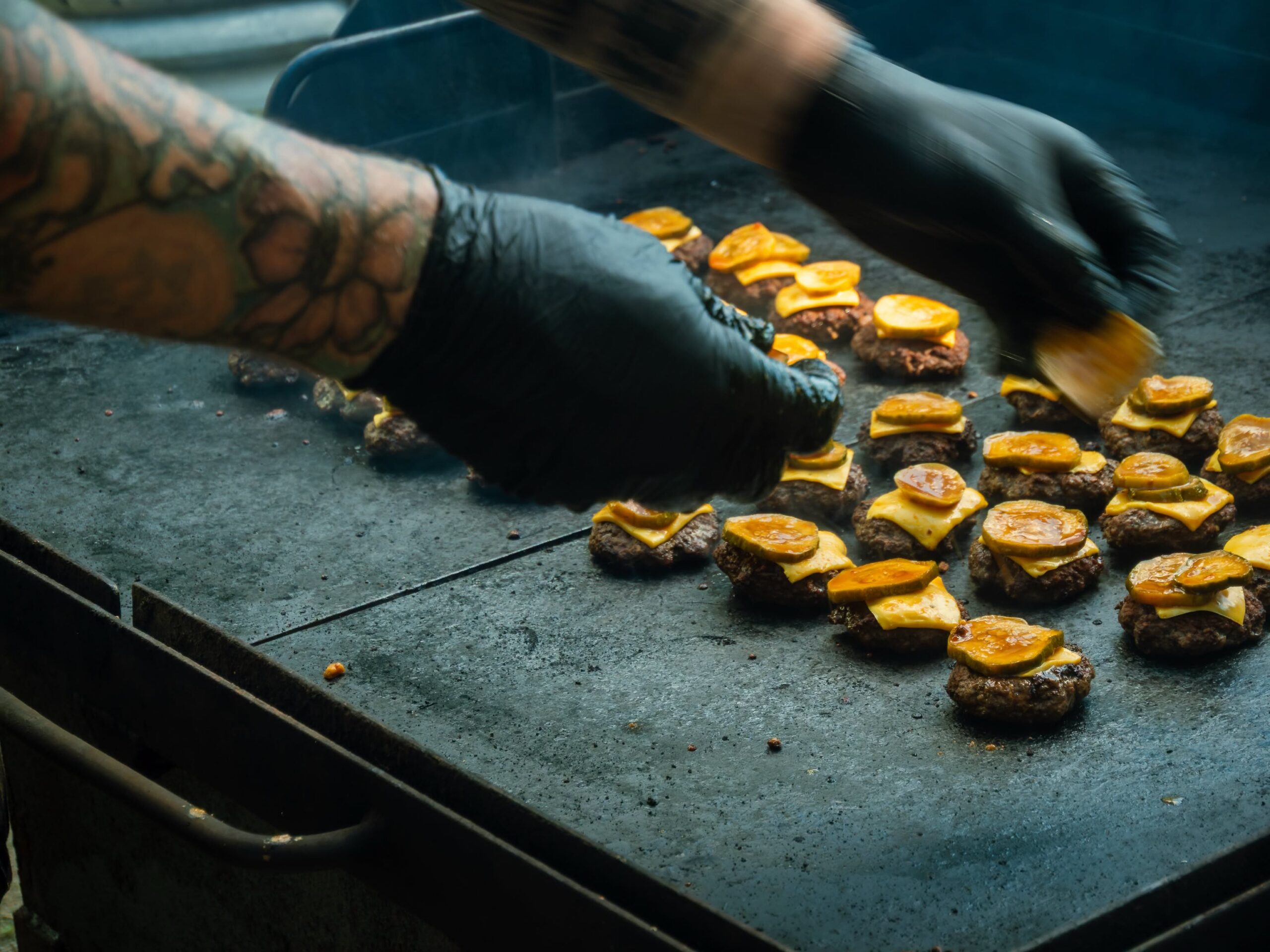
Food prepared by Katahdin Kitchen at Gather.
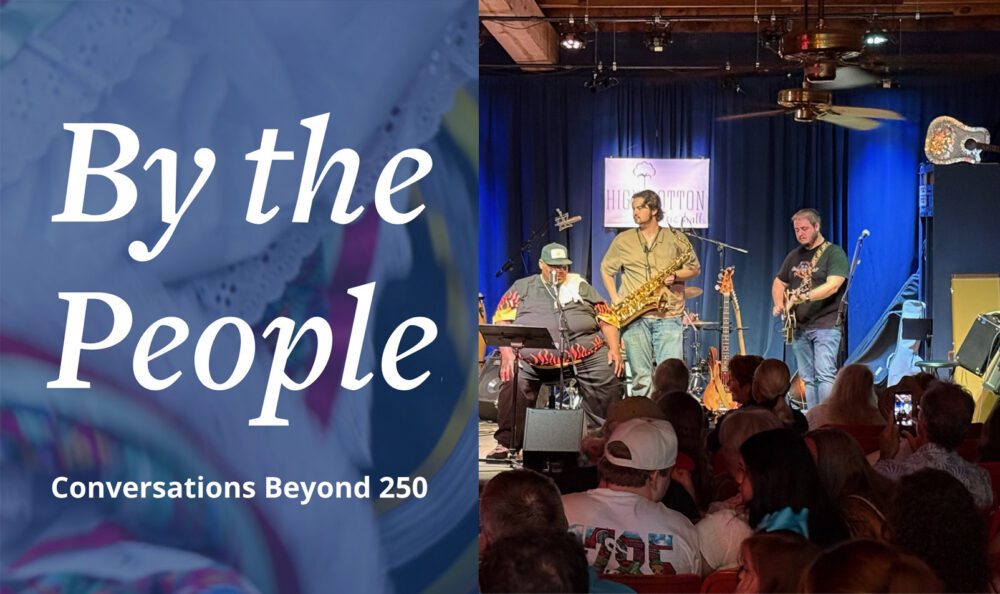
Michael Kebede (left) plays with Samuel James (right) at Gather.

Attendees socialize during the first part of Gather.

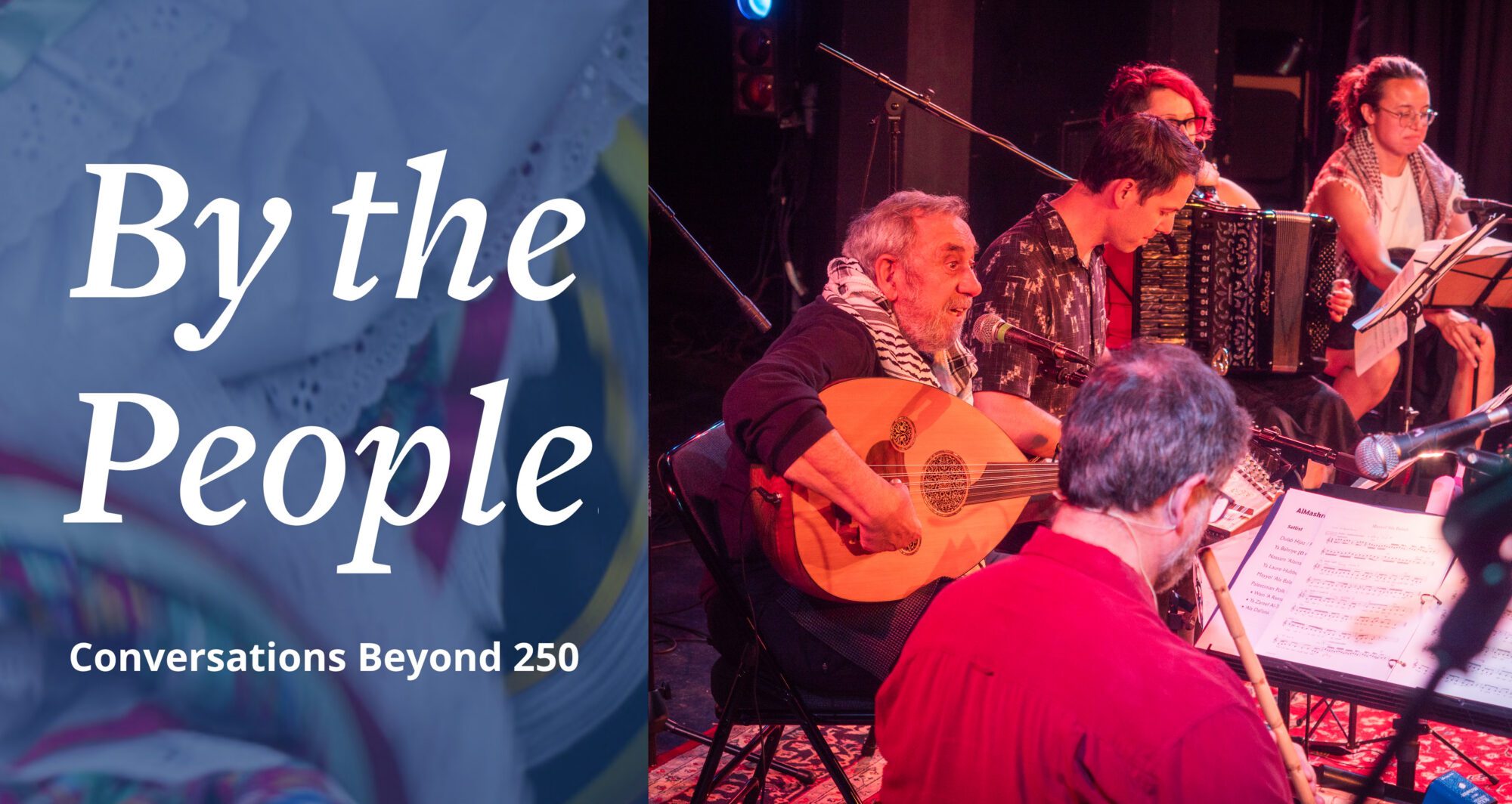
The Al-Mashreq Ensemble performs at Gather.

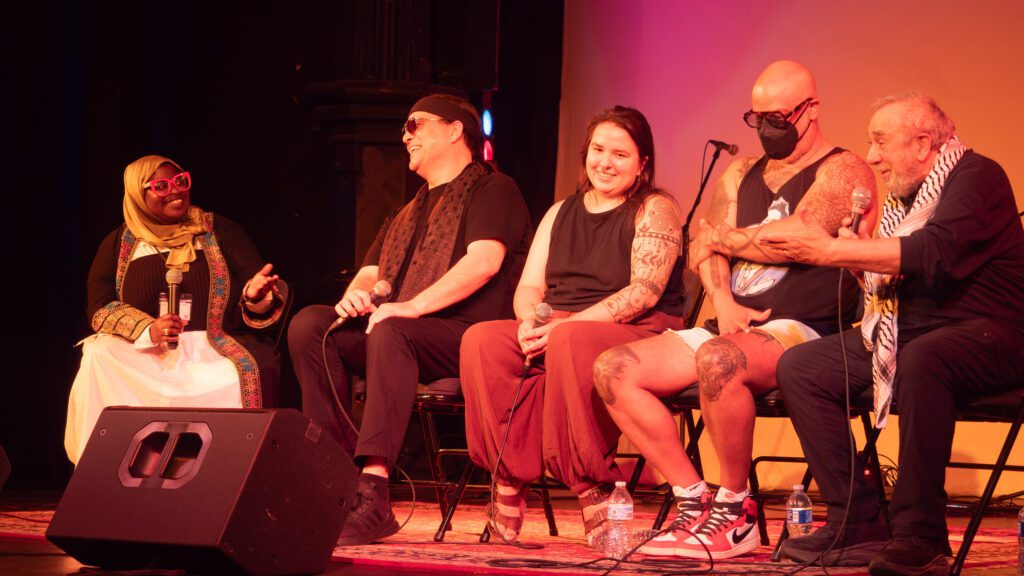
Panel discussion at Gather.
The Chocolate Church Arts Center in Bath, Maine. Photo via chocolatechurcharts.org
What are Humanities Councils?
Our nation’s 56 state and jurisdictional humanities councils are nonpartisan 501(c)3 nonprofit organizations established in 1971 by Congress to make outstanding public humanities programming accessible to everyday Americans. Councils are funded in part by the National Endowment for the Humanities (NEH) and connected by their national membership association, the Federation of State Humanities Councils.