Episode Description
Access to local journalism has been declining for years now. Newspapers are closing, journalists are being laid off, and media outlets have reduced or eliminated local coverage. HumanitiesDC’s Community Journalism Program addresses this pressing need by training Washington, D.C., residents in the discipline of journalism so they can tell the stories that matter most to them and their neighbors. In this episode, hear from the program’s coordinator, one of the professional journalist trainers, and a recent program graduate about how the program works and why it’s needed now more than ever.
Listen
Humanities = is available on all major podcast platforms. Listen on your browser by using the player above or find your preferred platform here.
Guests
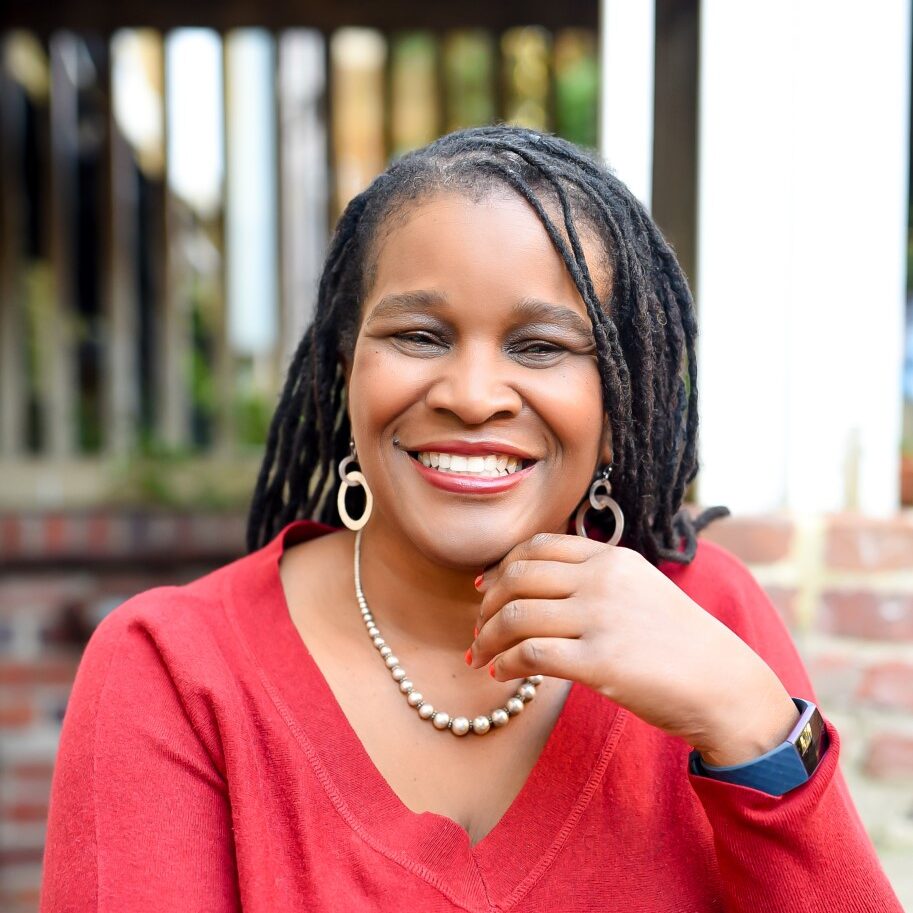
Lois Nembhard
HumanitiesDC
Lois Nembhard is the Director of Grantmaking + Programs at HumanitiesDC, where she manages the teams that implement their community grantmaking and our various public programs. She previously spent many years in grantmaking with AmeriCorps and the Social Innovation Fund.
George Kevin Jordan
Freelance Author & Journalist
George Kevin Jordan is a D.C.–based illustrator, multidisciplinary artist, and journalist. He is the Lead Journalist Trainer for the Community Journalism Program and also serves as a Community Connector for The 51st. He has spent more than 25 years reporting and editing stories at the intersection of cities, equity, and public life.
Carolyn Toye
Community Journalism Graudate
Carolyn Toye is a native Washingtonian and D.C.–based photographer whose work focuses on D.C. architecture, cityscapes, and found objects. Her photobook, The D.C. I See—Art of a Vanishing City, was published in 2019. She completed the HumanitiesDC Community Journalism Program in 2024.
Show Notes/Learn More
Founded in 1980, HumanitiesDC is one of 56 state and jurisdictional councils supported by the National Endowment for the Humanities to ensure the humanities are available to all. They believe the humanities (history, literature, language arts, ethics, philosophy and arts appreciation) are a powerful tool to help all Washingtonians, and others connected to the District of Columbia, deepen their relationships with the city and each other through the sharing of unique and universal stories, the fostering of intellectual stimulation, and the promotion of cross-cultural understanding.
Launched in Fall 2023, HumanitiesDC’s Community Journalism Program is a free 14-week training program designed to equip D.C. residents with the knowledge, skills, and mentorship to tell the stories that matter most to them and their communities.
Led by a professional journalist, seven (7) in-person workshops will cover basic print journalism skills and best practices, including how to find credible information and sources, conduct interviews, outline and write news stories, edit articles, and pitch stories to local media.
Participants will also engage in seven (7) small group training sessions guided by a local journalist who will serve as their mentor and story editor. By the end of the program, each participant is expected to write one news article that will be published online.
Further Reading
Curious Minds Zines: Read all articles written by participants in the Community Journalism Program
Read Carolyn’s article on East City Art, “DC Artists Continue the Search for Space in an Ever-Changing Landscape“
Purchase Carolyn’s photobook via the National Building Museum online shop: The D.C. I See – Art of a Vanishing City
Kevin George Jordan’s journalism and illustration can be found on his website.
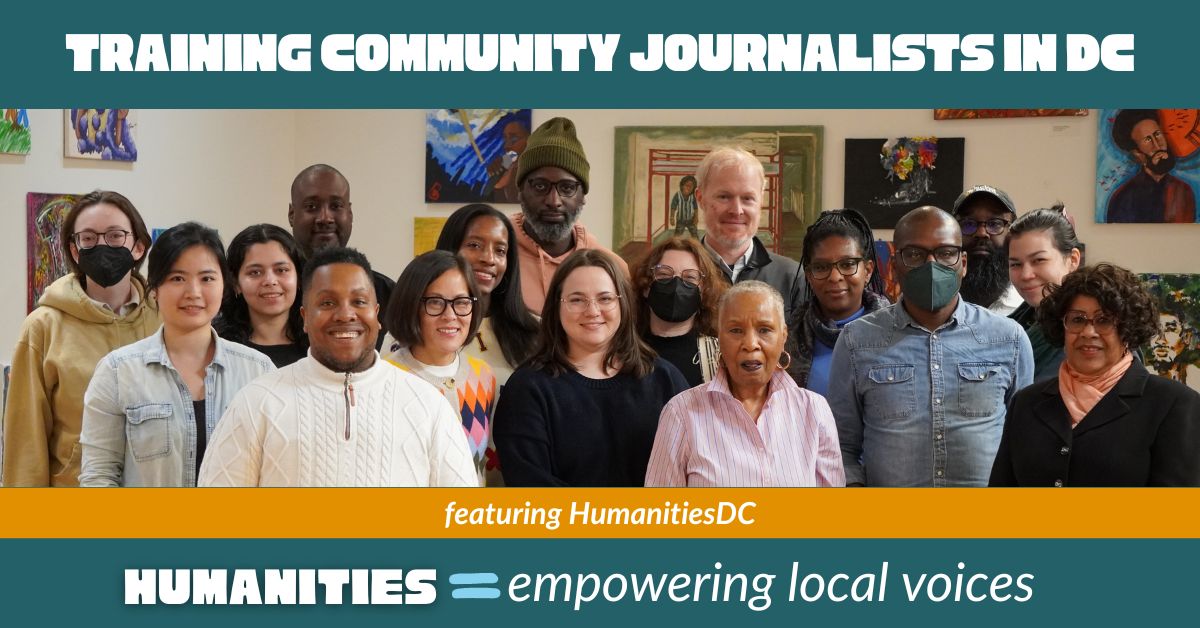
The 2025 cohort of the Community Journalism Program.
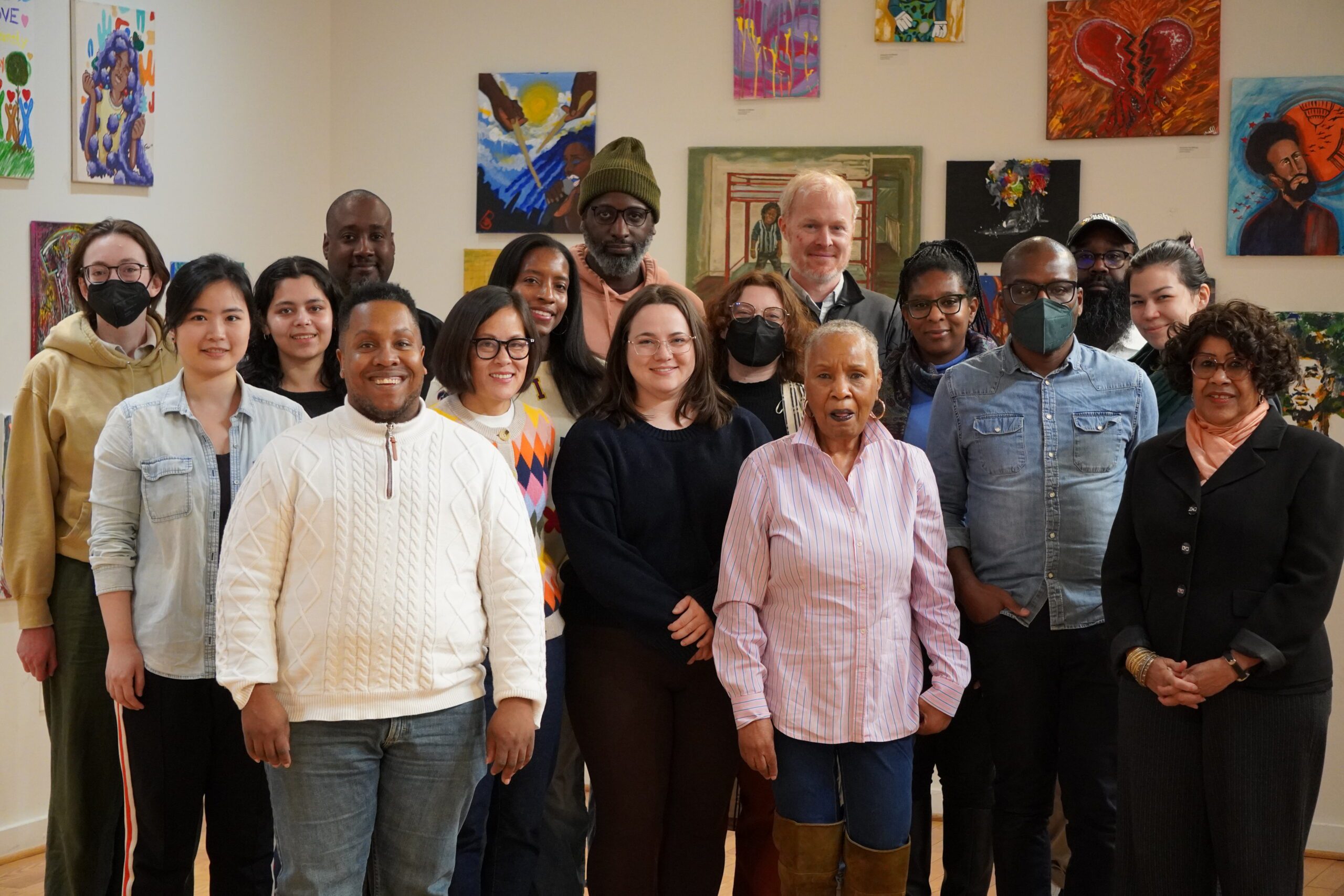
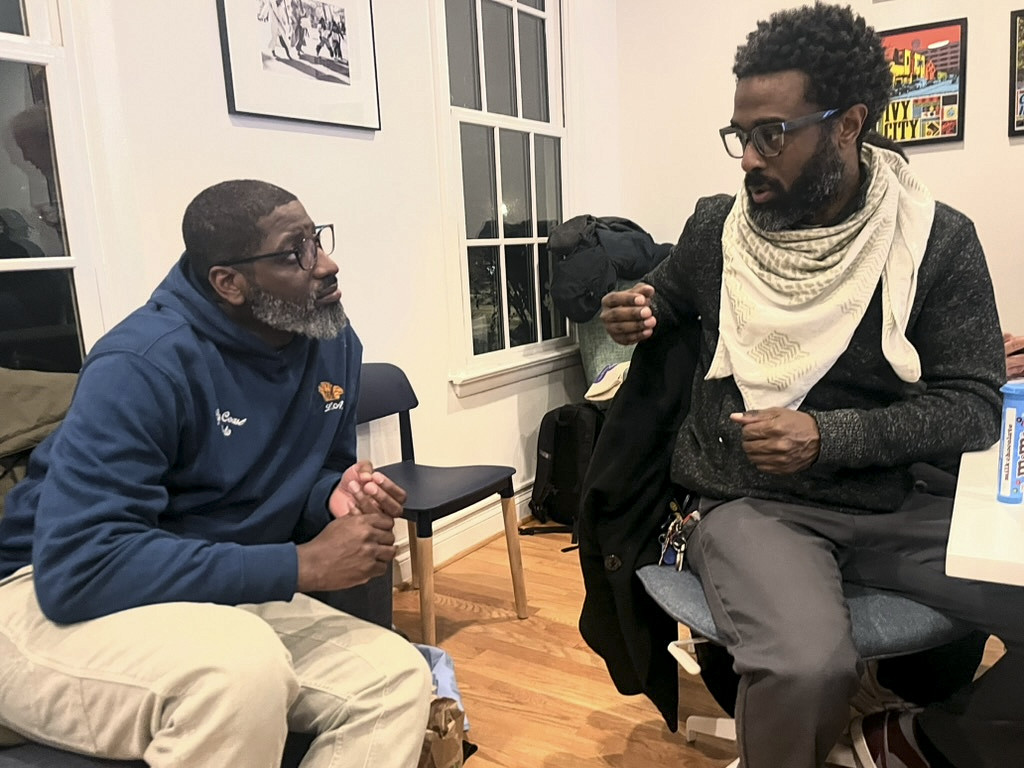
A lively discussion at the first session of the 2026 Community Journalism cohort.
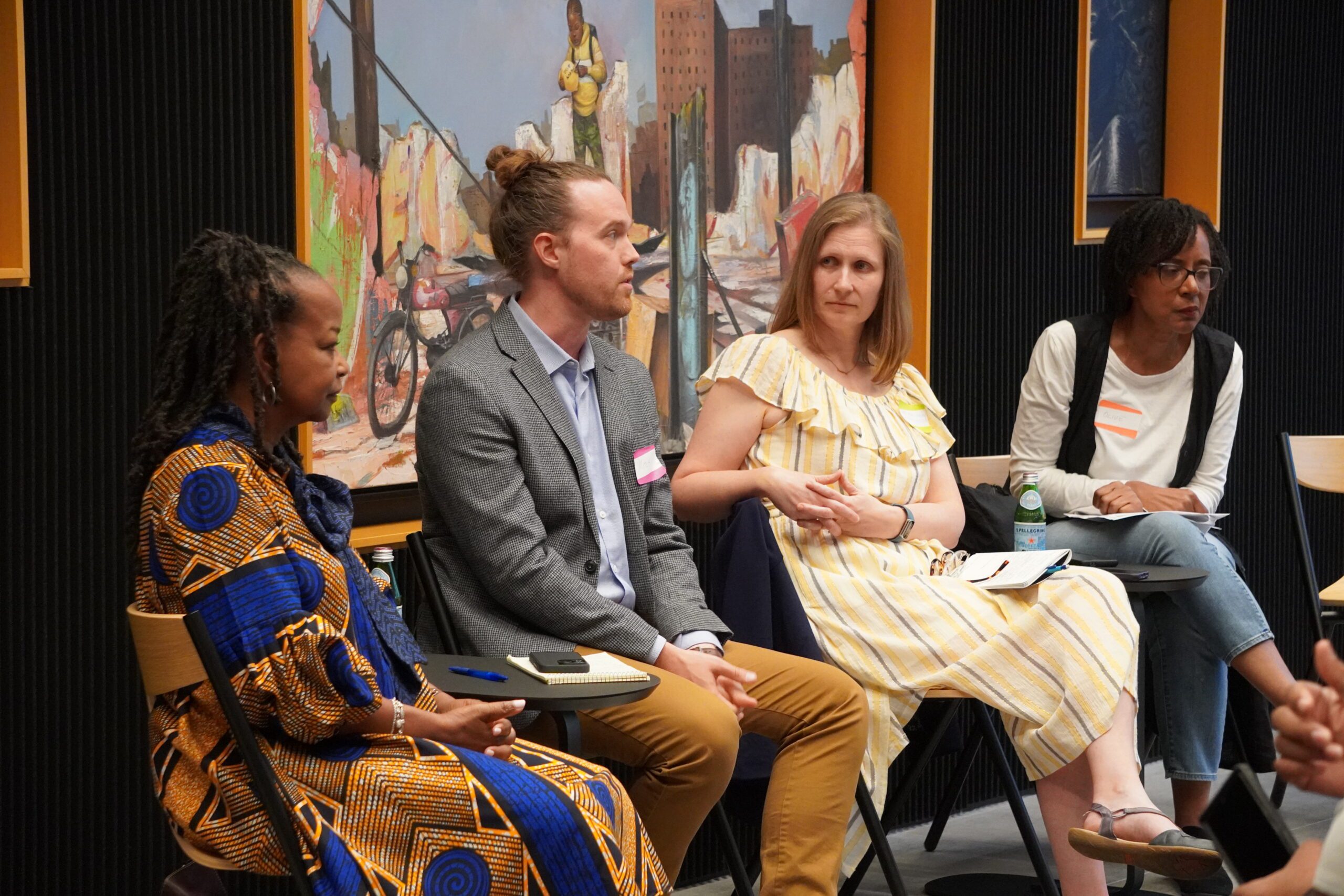
Participants during a 2026 cohort session.
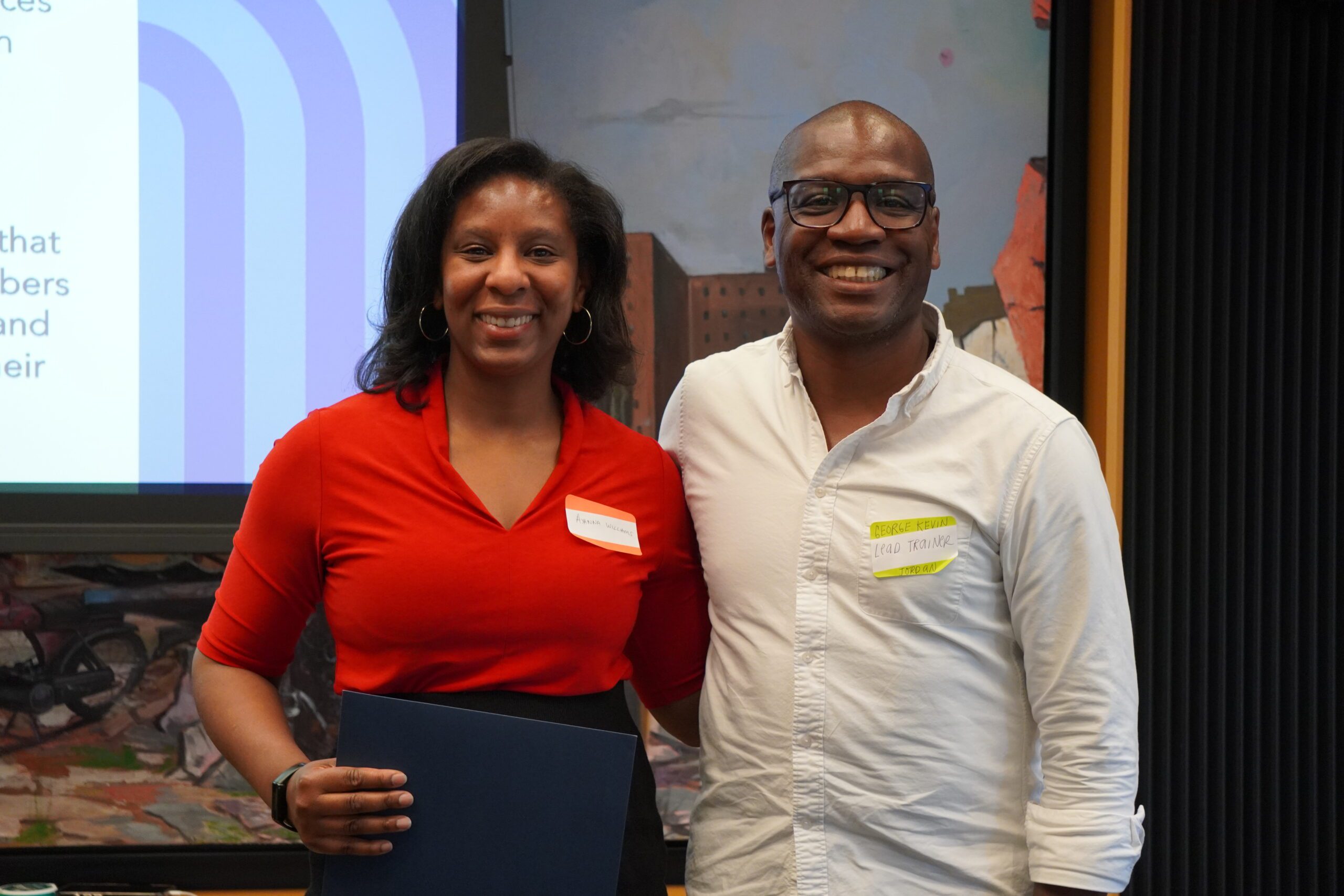
George Kevin Jordan (right) poses with a 2025 program participant at the closing event.
What are Humanities Councils?
Our nation’s 56 state and jurisdictional humanities councils are nonpartisan 501(c)3 nonprofit organizations established in 1971 by Congress to make outstanding public humanities programming accessible to everyday Americans. Councils are funded in part by the National Endowment for the Humanities (NEH) and connected by their national membership association, the Federation of State Humanities Councils.
Episode Transcript
Read Episode Transcript
Lois Nembhard:
This is worth doing because in a time of consolidation in the news media and less funding for local journalism, we’re losing the local perspective. And just everyday ordinary citizens need the tools to tell the stories that matter to them at the local level and the community level
George Kevin Jordan: Having the curiosity about your own city and then having the tools to go explore those curiosities is very powerful. And I think that is what participants are walking away with.
Hannah Hethmon (Narration): You’re listening to Humanities =, a podcast about real individuals, organizations, and communities making a real difference through the humanities.
I’m your host, Hannah Hethmon.
Humanities = is a production of the Federation of State Humanities Councils.
In December 2024, East City Art published Carolyn Toye’s first article as a community journalist. “DC Artists Continue the Search for Space in an Ever-Changing Landscape.” Successfully pitching her story on the local art scene was the final step in a fourteen-week program from HumanitiesDC that trains DC residents to tell the stories that matter most to them and their communities.
To learn more about the Community Journalism program and why it’s more important than ever to foster local journalism, I spoke to three people involved: the program coordinator, one of the professional journalists who serves as a trainer for the program, and participant Carolyn Toye herself. I’ll let them introduce themselves.
Lois Nembhard:
My name is Lois Nembhard. I’m the Director of Grantmaking and Programs at HumanitiesDC, the humanities council for Washington, D.C. With an amazing team, I’m responsible for our community grant making. We typically award about $1,000,000 each year to individuals, communities, and nonprofit groups, and our grants are selected by community members. I’m also responsible for our public programming, which includes monthly programs and give a platform to local humanists, our oral history collaborative, independent practitioner fellowship, and our community journalism program, which is about to start its fourth year next week.
George Kevin Jordan:
My name is George Kevin Jordan. I’m the Lead Trainer for the Community Journalism program. This will be my fourth year, the program. And before that, I was the Editor-in-Chief of Greater Greater Washington. I also was a reporter for the Afro and many startup publications.
Hannah: And Carolyn, over to you…tell us about yourself….
Carolyn Toye:
By day, I am a marketing manager for a local transportation association. And beyond that, I’m also a photographer, which I’ve done for many years. My work is very much rooted in and centered on D.C., and I’m also a native Washingtonian. In terms of my connection to the program, I was a participant in the 2024 cohort.
Hannah:
Lois, we’ll start with you. We’ll get the program overview. Let’s start with the need, the situation. If you were to pitch the community journalism program for the first time, how would you set the stage and describe why something like this is needed?
Lois:
So, my pitch is that journalism around the country is going through a lot of changes, and Washington, D.C. isn’t immune to that. We’re experiencing outlets closing, journalists being laid off, outlets narrowing their focus and reducing or eliminating local coverage altogether. And on top of that, certain communities have never received the coverage in the media that they should. The coverage they receive might be sensationalist in nature or overly focused on the negative and not address what the community itself cares about. So, a program like ours can play a role in addressing those forces and issues by training residents in Journalism 101 so they have the tools to tell the stories they feel are important, but also learn how to be more informed and discerning consumers of journalism.
Hannah:
With that as the situation, what is HumanitiesDC’s Community Journalism Program?
Lois:
So, our Community Journalism Program, CJP, is a free 14-week program that alternates bi-weekly workshops and Journalism 101 training with small group sessions. Twelve participants learn about journalism and report on a topic and write an article that gets pitched to a local outlet for publishing.
We work with a team of five experienced local journalists. George Kevin Jordan, who introduced himself before, is a primary instructor of their workshops and liaises with the other journalists. Then we have other local journalists this year and last year as well. We have had the exact same team two years in a row: Martin Austermuhle, jonetta rose barras, and Delonte Harrod. Each co-teach a workshop and lead and mentor a small group of participants. And then we have an editor, Julie Strupp, we added that last year, who edits the stories, does a final edit before we submit them for publishing.
The program is for DC residents. From the applications we receive, we create a balanced cohort that is as representative of DC as it can be. And I should say, over the four cohorts, we’ve received a varying number of applications each time, but 67 was the high. We received 33 this year, so clearly there is a need. As I mentioned, we pitch the stories that the participants write to local outlets, and each year most articles have been picked up. And additionally, we compile all the articles in a publication that’s called Curious Minds that can be found on our website. So, everyone gets published, whether they’re picked up by a media outlet or not. And we found just a lot of support within the local media community. Washington City Paper and 730DC in particular have been very supportive of the program.
Hannah:
Fantastic. So, George, tell me about your journalism background and what motivates you to do the work of local journalism.
George:
I started off very traditional at the Milwaukee Sentinel. So, I had a lot of traditional training. And then I got burned out. And then I left it for a few years. And then I came back as a freelancer and kind of like reconstructed my career all over again with a lot of startup publications, which I really enjoyed. And one of the things I enjoyed about that is the freedom of smaller presses to connect with the people, with niche audiences and niche topics that you get to cover. And that really reminds me of the community journalism that we’re doing here, where we’re really able to kind of do a lot of just on the ground journalism for communities that the actual participants are really impacted by.
Hannah:
And as someone with that professional background, why is it important to train up community members to do this work alongside professional journalists?
George:
Just the journalism training alone provides for a more informed electorate and a more informed citizenry. And I love that aspect. Just if you walk away and you don’t have a career in journalism, way more about your city than when you entered into this program. But I will also say that DC as well as the nation that’s gone through some constriction around journalism and mainstream journalism and traditional journalism, and this is filling that hole where people can come and learn the tools of what it takes to use the container of journalism and understand that. And it also builds a form of trust because you’re actually doing the thing, right? A lot of people in the class, they come with varying different degrees of trust around journalism, but after they leave, I would say anecdotally, and definitely Carolyn could speak more to this, whether this is true or not, I think there’s much more respect for journalism, there’s much more and trust in the format and in the power that it can bring to citizens.
Hannah:
Over to you, Carolyn. What is your journalism origin story? How did you become interested in telling local stories and what made you decide to apply for this program?
Carolyn:
My interest started in 2019, early 2019, I published a book on my photography. And as a part of trying to promote that publication or that book, that photo book, I spent most of that year participating in as many ways as I could think of to reach DC audiences, because obviously my book, which is all photography related to DC, is very hyper-local. And as a part of that process, I started having a lot of great conversations with people that I was around. And I was talking to both, I would say, Washingtonians, native Washingtonians such as myself or longtime Washingtonians. But I was also speaking with newer Washingtonians, people who hadn’t been here that many years, who were very curious and interested in DC and hearing people talk about their experiences growing up here. And I really started thinking seriously, and based on those conversations, on really documenting a lot of those stories.
But even though I do a lot of writing from a marketing standpoint, I didn’t really have any type of journalism experience or knowledge to really figure out how I was going to take that next step to start documenting these stories and get them out there. You know, even if I wrote a story, how would I pitch it? Who would be interested in me knocking on their door and saying, hey, publish me or whatever? So, I was just really trying to think of ideas and how I could start this. And ironically, just kind of boom, I woke up in the middle of the night one night, I couldn’t sleep. And I started scrolling on Instagram and up pops this post from HumanitiesDC about this program. And I thought it was destiny, to be honest, because not only would I be getting the fundamentals of journalism, it was an opportunity to be mentored by local journalists and on topics related to journalism. And I got up, filled out the application on my phone, and got it in.
Hannah:
I love that. What a great, that’s a great story. You never know that little thing that you see that changes, makes a big change. So, what are some highlights or memories from the 14-week program?
Carolyn:
I love the fact that the program delivered on exactly what it said it was going to deliver on. Like it was rigorous, but it took you through every facet of journalism. Coming up with stories, we pitched our stories to our trainers, researching stories, interviewing, outlining drafts, getting feedback, everything. It was not just theoretical. At the end of the program, it culminated in you actually having your article published. So, you left with that credential of being a published journalist through their zine. And I was fortunate to be one of the people whose story did get picked up by a local media outlet, which I was very thankful for. But even had that not happened, I would have been equally as thrilled So tell us a little.
Hannah:
Tell us a bit about your story that got published. How did you decide what to report on and what was it like to kind of chase down that story and pitch it?
Carolyn:
I wanted to tell a story that was related to the DC art scene. At the time, during that year, there was a lot of discussion by city officials on the topic of finding spaces for artists in the city. A lot of people were having problems either affording spaces or just the lack of spaces for artist studios or finding studios that met their needs and things like that. And somewhat coincidentally, I had a lot of friends who were actually dealing with that issue. And I had to decide kind of how to approach it because there were a lot of different ways I could have approached it, but ultimately working with my trainers, I decided that I wanted to take a more personal approach and I ended up interviewing three or four artists and talking about their kind of, not just their struggle to find space, but what creative solution that they came up with. So, one person ended up getting a space in Baltimore and having to commute every day. Another person converted their home into a studio for an exhibition because he wanted to launch his career after giving up a corporate job. And another friend who was starting a small art organization. So, I ended up interviewing them for the story.
Hannah:
Lois and George, kind of following on Carolyn’s story, I’d like to get a sense for what issues matter to your community journalists. What are some of the stories and topics that your participants have reported on?
Lois:
I was looking at the list this morning and it’s really quite a range. So just a few titles: “DC’s at The Center of a Historic Refugee Crisis And Local Advocates Are Struggling,” “Dating in DC Can Be Confusing. Here Are 5 Ways to Attract an Authentic Relationship,” “Tenant Organizing In One of DC’s Largest Apartments,” “Meet the Man Who Wants More Black Men To Do Yoga.” Carolyn’s article is one I had on my list as well. And George, I don’t know if there are others that stood out to you, but they really represent the backgrounds and communities that the participants are part of.
George:
Yeah, I would agree with that. I love Carolyn’s story. For me, because I’m seeing it from the beginning, just to see from ideation to publishing is just such a great feeling, whether or not that’s picked up by a local publication or is included in the zine, which is a big deal to, at the end, offer a zine where you’re kind of guaranteed publishing is really great. And I think it’s really satisfying to go through a program when know that your stuff is going to be public.
Hannah:
I mean, I’ll say for people who are listening, for those like me who love different kinds of magazines with unique stories and want to hear these perspectives, this is all online. The zine is all online and you can browse or print it, download as a PDF, and go through it.
What are some of the key steps in training everyday people to be community journalists. if someone was trying to replicate this in other cities and states, what are the key things that they need to teach? And I think, what are the things that people like Carolyn who are looking for this, that they just can’t find on the internet?
George:
I think you can find all these things sprinkled around the world of the interweb or the internet, but I think this really brings everything together in a cohesive way with very clear expectations. We are not trying to do fiction. We are not trying to do something else. I say the phrase a lot, the “container of journalism,” because I want people to know that when they are here, that is the space we’re going to be. And there’s a lot of room there, but there’s also a lot of limits. And I think that if you’re going to do this program, not spreading yourself too thin and really drilling into what journalism can do is very helpful.
And then I also think the other thing is that CJP hired the experts. They went and found journalists that are literally working in the field right now, who literally are editors and reporters. and can provide that real-time feedback as to, hey, I pitched last week, and this is my experience around pitching, and this is how I come up with ideas, and I think that is very helpful. And then also to give the participants a little shine, it is very humbling to begin anything. And Carol’s an artist, I’m an artist as well. And I think one of the biggest hurdles that I have seen in the program, and I see when people let go of this, is this idea that they have to come to something fully formed. We are not asking you to come in as journalists. Actually, we’re expecting the opposite. We’re coming hoping that you’ll be a humanist and be open to understanding what this project is and walk away with that knowledge. And everybody is really coming with an open heart and understanding about that. And that takes great bravery to sit there and to be talked to for 14 weeks about something and slowly have to try and learn this. And I think I’m just humbled by the participants who are willing to do this.
Lois:
I would emphasize one point that George made about the expertise, that we really do at HumanitiesDC rely on the expertise of the journalists. The program was initiated, the initial concept, and the first two years of coordinators were journalists, and then we brought it more in-house. But in terms of content expertise, it is George, and it is the others that we rely on for that. And the other thing I would say is in terms of starting a program overall, don’t start from scratch. Learn from us and from others. We certainly did. Cole Goins of the Journalism + Design Lab at the New School has been invaluable, and he’s working with other councils and others, and they’re focused on supporting local news systems, but we’re certainly willing to share our materials with others as well.
Hannah:
I want to end by asking everyone about impact. So, Carolyn, how did participating in this program impact you? What do you think has changed about you or your life or your thought processes because of participating in this?
Carolyn:
This endeavor was as much of a passion to me as my photography is, or an unfulfilled passion, actually, I should say. And so, going through this program, this course, like I said before, I got a lot of the found all of the foundational information and knowledge that I needed about how to craft a story and everything like that and actually getting published. But I think the most invaluable thing that I walk away with is I would say that the program gave me a confidence that I did not have or I would not otherwise have found. I don’t know of any other program that would have met my interests and my needs for what I want to do more closely, more aligned than this program did. So, I walk away with this newfound confidence. I think that’s what I’m leaving and expertise, but just the confidence to, you know, to take that step, to actually sit down and write a story.
What I love about the program is that I have so much respect for journalists, but I think that there is a respect that they have for us who are part of this community and our perception and the stories that we have. I, you know, I, for as many things as have been said about DC over the years growing up here, we hold a lot of monikers like, the murder capital of the world, and there was a big crack cocaine epidemic and all of those things. But I, as a Washingtonian, I feel like I can’t let someone judge this city by the sum of its darkest hours. This was an amazing place, is an amazing place, to have grown up in. And so, when I have the opportunity to talk to people, either through my photographic work and now through my writing, I let them know what it has meant to grow up here.
I mean, everyone loves where they grow up, but to have grown up in DC has just been, I mean, I could tell story after story about what that has been like. I’ve seen, you know, Martin Luther King, Jr. speak. I saw Nelson Mandela when he got out of jail. He stayed at the Madison Hotel. I was working in the office building next to the Madison Hotel, and he and Winnie would come out and walk across the street to the Post for their interviews. I saw Gorbachev when he was here. You know, I can read about an artist, and when my son was growing up, he was very, you know, liked to draw and everything, and I’d get him these children’s books on famous artists, Picasso or Van Gogh, and then I’d get online and find out which Smithsonian I could take him to on the weekend and actually see them. So, I don’t take any of that experience for granted. And I feel as a result of this program, I feel. Emboldened to tell those stories and now I have the ability and the skill to do so.
Hannah:
And it sounds like you are planning to write more and hopefully share these stories?
Carolyn:
Absolutely. I have some very interesting projects in the works. This was actually the initial idea to bring this full circle. Once I had written my book, going into that next year, my idea was to do something like a DC photo album, where I would have the opportunity for people to photograph people’s artifacts of their lives growing up in DC and also tell their story. One of my aunts just turned 97, and she can talk as passionately about growing up here as I can. So that’s kind of the project that’s in the works, but they all do include and incorporate writing and as well as pitching and hoping to get them out into the city through other.
Hannah:
That’s exciting. I love that idea.
So finally, Lois and George, how have you seen this program make an impact? In a world of limited budgets and time, why is this something worth funding and doing?
Lois:
I’ll let the journalist go first.
George:
I will say, personally, for me, this really re-instilled my excitement about journalism. I think a lot of times, if you just look with a national lens, you can get a bit lost, but there’s something about being able to report and write and teach about how to have tools to write about your community that is empowering within itself. And I really love that. And I love being able to talk to participants after, and they’re excited to work on their next project, or they’re excited that, they may get a part-time job at like 730DC, or they may, do something somewhere else that is a lift off from where they came with the program. That is really great.
And I would also just say, I’m not a lifer from DC. I’ve only been here since 2018, but my entire life in DC was defined through the lens of journalism, meaning I started off as a freelancer and then a full-time journalist. And I don’t think I would really understand DC if I didn’t have the container of journalism to help explain it for me. And I think that having the curiosity about your own city and then having the tools to go explore those curiosities is very powerful. And I think that is what participants are walking away with. And I think it’s encouraging also for the trainers too to walk away knowing that what we do actually has tangible results for the people we serve in this district.
Lois:
This is worth doing because in a time of consolidation in the news media and less funding for local journalism, we’re losing the local perspective. And just everyday ordinary citizens need the tools to tell the stories that matter to them at the local level and the community level and fill that void. And we’re really passionate at HumanitiesDC about giving people the tools and the platform to tell the stories of DC. And this is just a really great and powerful way to do that.
Hannah:
Wow. This episode is giving me hope. I’m just so inspired by everything that all of you are working on. So, thank you for taking the time to having us.
George:
Thank you.
Lois:
Thank you.
Carolyn:
Thank you for having us.
Hannah (Narration): Thanks for listening to Humanities =, a podcast from the Federation of State Humanities Councils. You can learn more about the humanities councils and programs in this podcast, see episode transcripts, and explore additional content on our website, statehumanities.org, that’s statehumanities.org.
Our nation’s 56 state and jurisdictional humanities councils are nonpartisan nonprofit organizations established in 1971 by Congress to make outstanding public humanities programming accessible to everyday Americans.
If you’d like to learn more about your humanities council or support their work through a donation, you can do so at statehumanities.org/directory or by searching your state name + “humanities council.”