More than 60% of humanities councils deliver programs that serve veterans, active-duty military, and their families. Writing workshops, documentary film screenings, and reading and discussion programs help veterans, their families, and the broader public better understand and appreciate military experiences. Humanities councils also run and provide funding for initiatives that honor veterans throughout history. Here are just a few examples of the many ways humanities councils serve and honor veterans.
States featured in this article: New Jersey | Florida | Texas | California | Idaho | Michigan | West Virginia | Virginia | Maryland
Councils in New Jersey and Florida partner with local colleges to offer free humanities college courses designed specifically for veterans

As a proud affiliate of the Clemente Course in the Humanities, the New Jersey Council for the Humanities offers free, college-level coursework to U.S. military veterans. The 2025 course, enrolled to capacity at Atlantic Cape Community College, will help veterans understand their military experiences in a broader context, among a supportive group of peers and instructors, with no minimum education requirement—and participants can earn college credit transferable to NJ universities.
Florida Humanities has also partnered with the Clemente Course in the Humanities to offer a free in-person humanities course for Florida veterans through the University of South Florida St. Petersburg in Spring 2026. Veterans will be able to earn three transferable college credits and learn about core humanities principles through the Isekai genre of storytelling in the “Warriors and Worlds” course. This course will be taught by Dr. CeCe Edwards, an Army National Guard veteran. By studying themes of transformation and resilience, participants will gain insight into personal and cultural identity. By the end of the course, they will connect these ideas to life transitions and discover new perspectives on the power of storytelling.
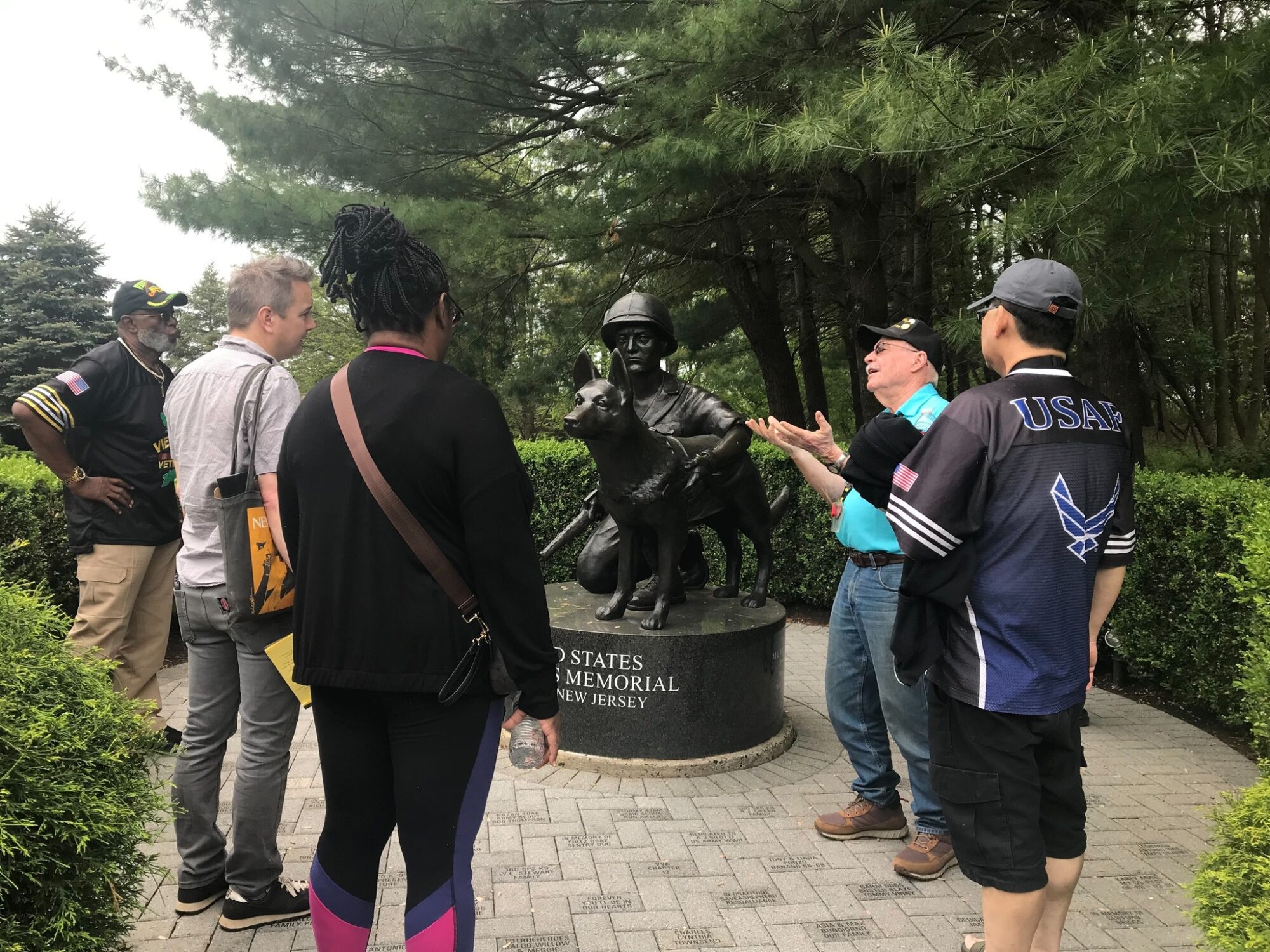
Humanities Texas facilitates reading and discussion programs where veterans and their families and friends can talk about war, military service, and the return to civilian life
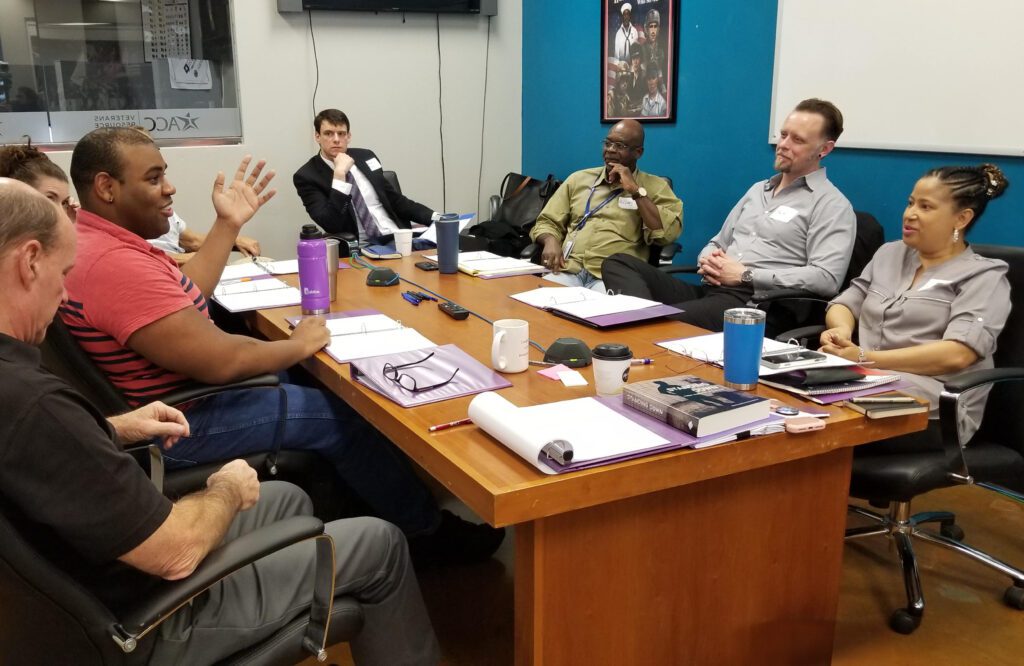
Veterans’ Voices is a Humanities Texas reading and discussion program that brings veterans, their families and friends, and other interested civilians together in small groups to read aloud from classic and contemporary literary texts about war, military service, and the return to civilian life. After the readings, participants engage in facilitated conversations that explore how the texts relate to their own experiences and allow for shared reflection on combat and civic responsibility. These events are free and open to the public. Attendees don’t have to prepare or have any prior knowledge of the material to participate.
“[Veterans’ Voices] is different than anything else I’ve ever done with vets,” said a discussion leader in College Station, Texas. “Through the discussion, all assumptions, insecurities, and misconceptions go out the window. It really levels the playing field and helps everyone to feel validated in their own veteran experience. To see a multi-combat tour special ops veteran validate the experience of a Coast Guard veteran is a very special thing and strengthens the entire community.”
Listen to a podcast episode about this program.
California Humanities provided grant funding for a documentary that tells the story of a Marine killed in combat and the decade-long emotional journey of his family and fellow veterans
California Humanities provided grant funding to American Sons, a profoundly intimate documentary that traces the enduring scars of war through the story of Cpl. JV Villarreal, a Mexican American Marine from Texas, killed in action in Afghanistan. Told through JV’s own raw, never-before-seen combat footage and the decade-long emotional journey of his Marine brothers and family, the film is both a tribute and a courageous exploration of grief, resilience, and love. The documentary premiered at SXSW in 2025, where it earned critical acclaim. The filmmakers hope American Sons sparks conversation about the challenges veterans face in transitioning to civilian life—especially as rates of suicide and mental health struggles continue to rise.
The Idaho Humanities Council funded a rural history museum’s project to compile 400 biographies of local veterans
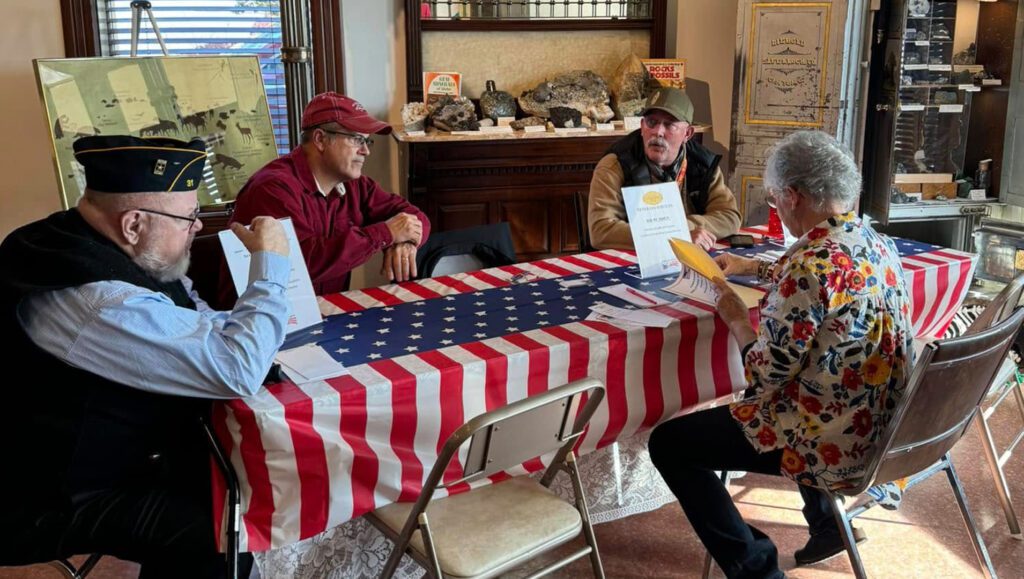
Every year, humanities councils award grants to community nonprofits and organizations to serve and honor veterans. In 2024, the Idaho Humanities Council awarded the Hagerman Valley Historical Museum $998 for their project, “Hagerman Valley Military Appreciation Project.” The project consisted of compiling over 435 biographies for individuals who have served in the U.S. military or as military support workers and were born, lived, or are buried in the rural Hagerman, Bliss, and Tuttle areas. The resulting booklets were unveiled and made publicly accessible for visitors at a Military Appreciation Day at the Hagerman Valley Historical Museum on November 9, 2024. This photo is from that event.
In 2024, the Idaho Humanities Council awarded small grants to 66 organizations and individuals across Idaho. Grant-making is an important role for most humanities councils. Their grants are accessible to small organizations like museums, historical societies, and rural libraries that—due their size or lack of capacity—might otherwise have difficulty securing grants. In total, humanities councils award $37.5 million in 3,500+ small grants each year to community organizations and projects.
Michigan Humanities created a facilitated discussion space for women veterans to share their experiences with each other
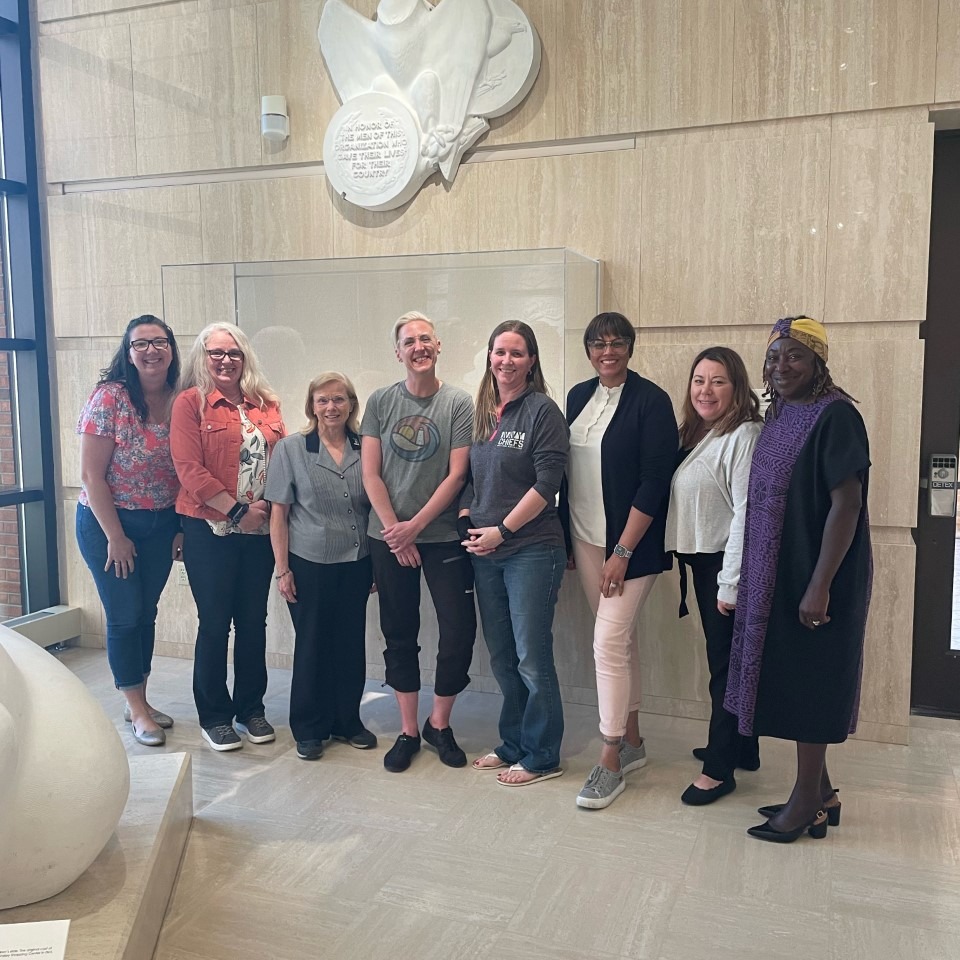
Michigan Humanities’ Same Mission. Many Stories. program used museum objects as the grounding focus to hold sustained reflective conversations with women veterans from across the state of Michigan. These conversations created an environment for sharing and listening that was extremely impactful on participants.
Conversations were facilitated by university students and museum staff after a month of facilitation training and content learning. Through critical trust- and relationship-building, Michigan Humanities led a collaboration among veterans in the community, higher education institutions, their museums, institutional veterans affairs departments, and the Michigan Veterans Affairs Agency (MVAA).
Success of the program has led to a deepened partnership with MVAA and the ongoing expansion of the program to reach other groups of veterans in the state.
Listen to a podcast episode about this program.
A program from the West Virginia Humanities Council teaches students to research and write biographies of veterans interred in West Virginia’s national cemeteries
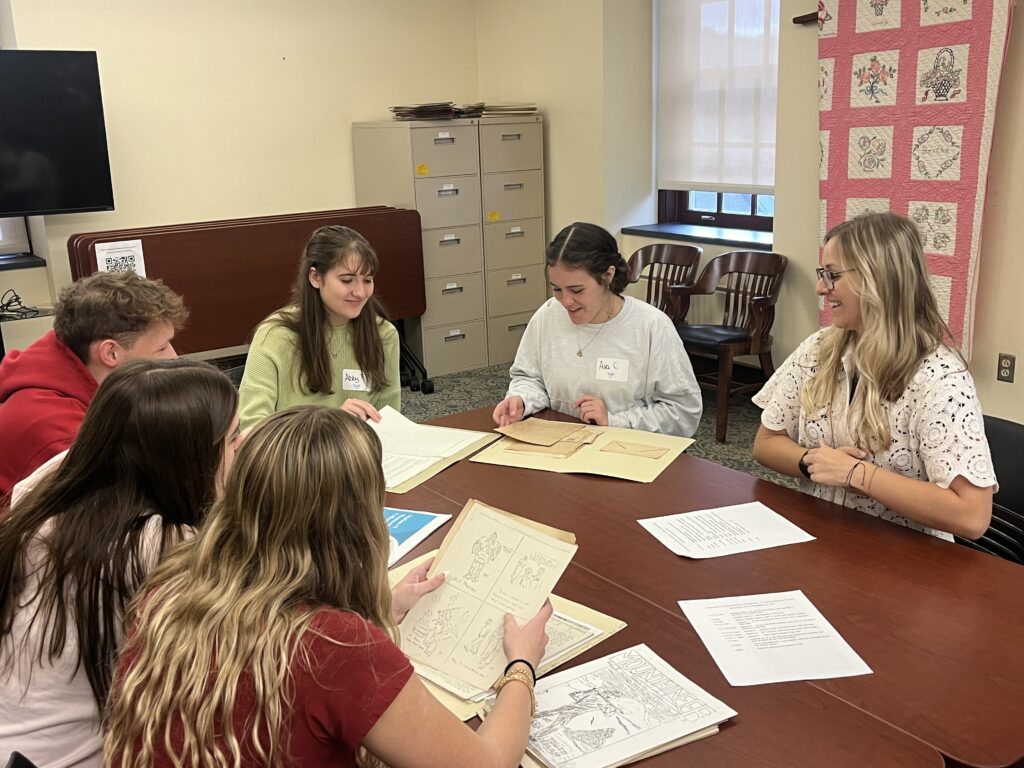
The West Virginia National Cemeteries Project, a program of the West Virginia Humanities Council, engages directly with high school students to research and write biographies of veterans interred in the Mountain State’s national cemeteries.
Using newspapers, yearbooks, obituaries, census records, city directories, archival records, and sometimes even letters or interviews with family members, the students seek to vividly memorialize the lives and service of their veterans. In the eyes of the project, every veteran’s experience is considered equally valuable. There is no requirement for length of service; a veteran need not have seen combat or served during a conflict. The only prerequisite is interment at one of West Virginia’s two national cemeteries.
The program is now in its fifth year, and is funded by a grant from the U.S. Department of Veterans Affairs. The completed biographies and two digital exhibitions are available on the West Virginia Humanities Council website.
Virginia Humanities supported a workshop on recording veteran stories through oral histories and reflective writing
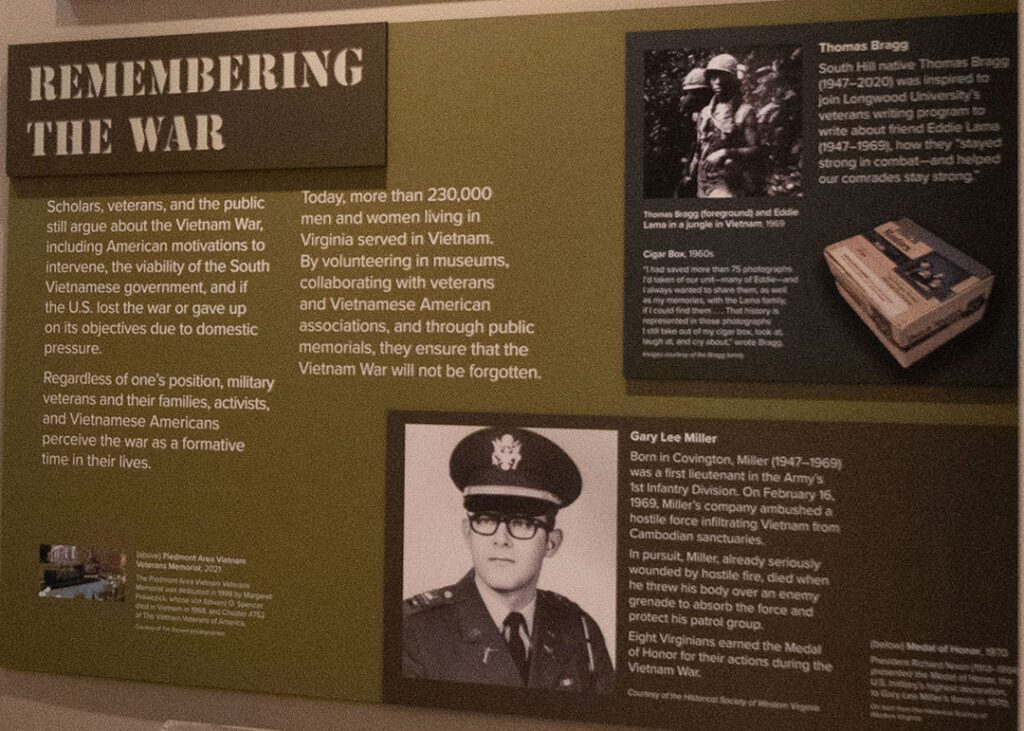
In February 2025, the Virginia Museum of History and Culture had an exhibition titled Virginia & The Vietnam War, prominently featuring oral histories of individuals who lived through and witnessed the war. To expand on these themes, Virginia Humanities supported and co-led an event at the museum called “Recording, Writing, and Sharing Your Stories: The Practice of Oral Histories and Veteran Writing Projects.“
The practice of recording and sharing oral histories is an important tool not only for professional historians and museums but also a way to preserve the stories of everyday individuals. Additionally, for military veterans and family members, creative writing serves as a meaningful technique to reflect on their experiences. The workshop was taught by Katy Clune, Virginia Humanities’ director of the Virginia Folklife Program and Virginia’s state folklorist, and Michael Lund, veteran, author, and director of the Home and Abroad writing program. Participants learned more about the techniques of oral histories and reflective storytelling and receive practical tips and tricks for how to engage in these practices.
Maryland Humanities coordinates statewide Veterans Book Groups that reduce isolation and foster connection
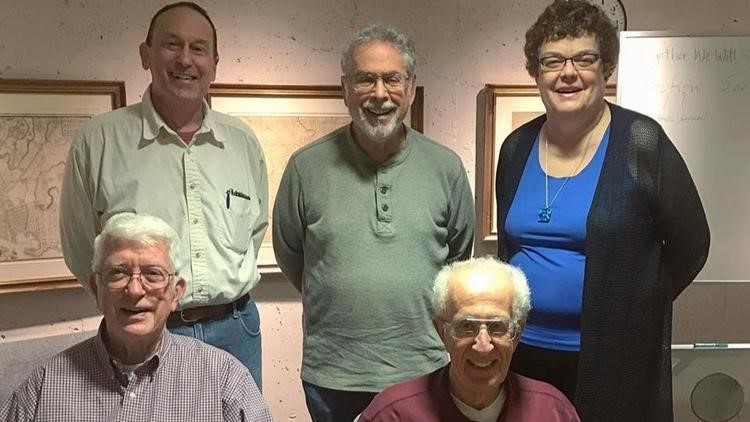
Maryland Humanities’ Veterans Book Groups aim to bring veterans of all eras together to talk about military experiences and returning to civilian life while providing an informal, supportive environment for discussion. Using literature to discuss service fosters connection, reduces feelings of isolation, and provides a safe context in which to explore issues regarding military service.Readings range from classics to contemporaries—that means Herman Melville to Khaled Hosseini and everywhere in between. Syllabi vary, but all groups read the full gamut of literature including memoirs, novels, poetry, short stories, and essays.